E-commerce Optimization: Why You Need a Data-Driven Marketer
E-commerce Optimization: Why You Need a Data-Driven Marketer
1. The New Standard of E-commerce Excellence
The days of relying solely on intuition when it comes to marketing and watching as your e-commerce store crawls along with minimal margin for error are over.
-
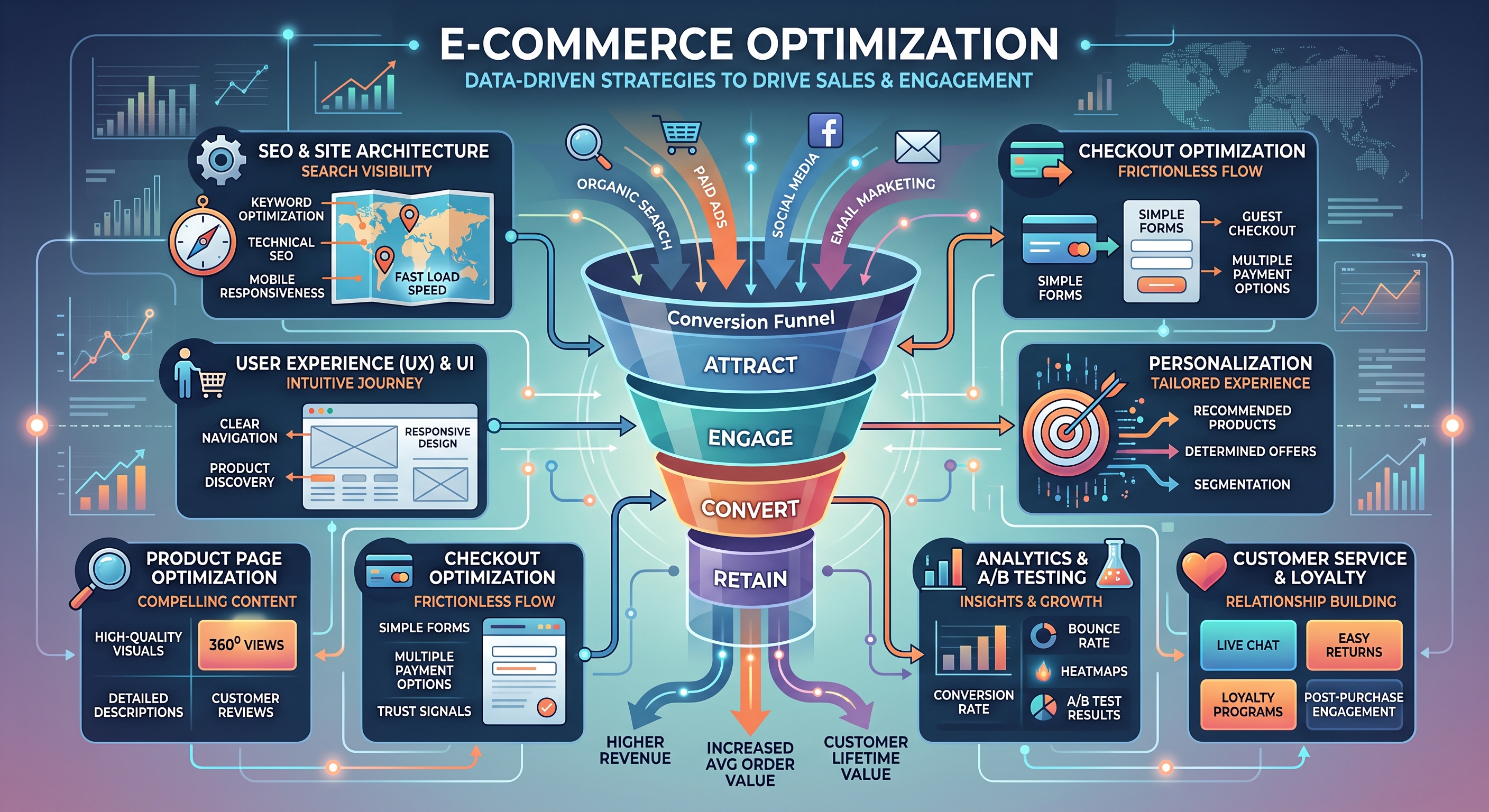
What E-commerce Optimization Actually Means Today. The term, nowadays, goes far beyond those simple A/B tests of calls-to-action, such as download buttons, which, in the best of cases, were simply verified to work, as opposed to others. Currently, every single point of contact between the user and your company on the web is a candidate to be ‘optimized’ – gradually, but in depth.
And, increasingly, all of this needs to work to turn mere window-shoppers into fans of your brand who never tire of buying from you. That ‘spray and pray’ model of the past is no longer adequate. What has taken its place is a discipline based almost entirely on hard facts and on in-depth analysis of user behavior, facts and data which, however, are also influenced by one of the principal laws of human behavior – that of psychology.
-
AI tools can automate much of work by generating, copying and even analyzing large volumes of data in order to draw conclusions. But in order to create successful brand stories that emotionally resonate with audiences, human expertise remains essential for strategic thinking, creativity, and understanding customers emotions. While AI tools like these can tell you the what and the how, the why is always a result of human specialization and creativity.
-
In a crowded online environment, data-driven marketers possess the unique specialized skills to effectively translate large volumes of user traffic into consistent and high revenues. In essence, they link disparate user data to deliver a cohesive online experience. Without this expertise, online stores risk losing sales and missing valuable growth opportunities
2. The Evolution of E-commerce Opimization Marketing
E-commerce optimization marketing has operated using the batch and blast approach. Building large email lists and utilizing the same banner ads across multiple websites were strategies that worked in a linear, predictable environment. Intuitive decisions were made without fully utilizing the available data to inform marketing efforts.
As consumer behavior evolves and technology improves, things have become a whole lot more complicated for marketers. No longer can they rely on a straightforward Buyer’s Journey. Instead, consumers interact with products and services across a multitude of touchpoints, all of which must be tracked, monitored, and understood by the brand in order to provide a relevant experience.
The simplest example of this is the journey to purchase a product or service online. Consumers can now discover products on social media and then go on to research those products using voice search before finally making a purchase through a brand’s app. It’s becoming increasingly difficult for marketers to effectively map the online Buyer’s Journey without the aid of technology.
The buyer’s journey has become far more complex. Today customers interact with brands across a number of touch points before making a purchase. They could discover your brand through social media, search for reviews online using voice search, then go on to download your brand’s mobile app and make a purchase there. Trying to follow a customer’s journey through this complex web of interactions without a map is close to impossible.
The way one measures success has fundamentally changed as well. E-commerce optimization is now a volume to value model and as such, focusing on one-time customer acquisition without considering customer Lifetime Value (LTV) often reduces long-term profitability and the focus of marketers should be on generating first time buyers that in turn bring value to said businesses, by being loyal and coming back for more through highly personalized and data-driven experiences that are of high value. To achieve said goals, marketers will have to trade the broad-spectrum and often unsuccessful guessing for a more precise and fine-tuned data-driven approach.
3. Defining the "Data-Driven Marketer"
The data-driven marketer is a mix between an analyst, a strategist and a behavioral psychologist. Most marketers are used to basing their work, gut feeling, competition analysis and best practices.
The data-driven marketer uses empirical evidence to maximize return on investment. They are the modern e-commerce optimization architect. He/she turns every customer contact into new potential data points. Thus they can continually improve their system for dealing with customers.
The Technical Arsenal
The data-driven marketer has technical expertise to track customer behavior in detail with Google Analytics 4 (GA4) and works with his or her CRM (e.g. HubSpot, Salesforce) to fully align marketing efforts with the respective sales pipeline.
They also use specialized e-commerce heatmaps to see in detail where customers are clicking and how they are interacting with a website. This allows for key friction points to be identified and for marketing strategies to be changed before they become a revenue problem.
The AI Integration
While there are countless AI tools on the market today and their use is increasing, the data-driven marketer uses them as a lever. They have the AI do the mundane work of mass data cleaning, analyzing customer sentiment, performing the initial SEO audit of written content, and more.
The data-driven marketer uses their time to go through a high-level strategic audit. They can understand the reasons behind the numbers, and add the much needed human touch to their marketing strategies.
The Mindset and Soft Skills
A culture of continuous testing and learning exists at the core of the work of a data-driven marketer. Nothing is ever complete for this type of professional. For them, a landing page that has not been tested against a variant of the page is merely an opinion.
They have the critical translation skills to translate complex data into an actionable summary for key stakeholders. Such a summary provides executives with the appropriate levers to pull in order to increase revenue while making sound business decisions.
4. Why Data is the Backbone of Optimization

Data within e-commerce optimization today is not something that is produced by a business and then subsequently used to improve it, it is actually the fuel that drives the business. Without data, a business is being driven blind with the marketer potentially making decisions about what customers want, when actually all the decisions should be based on what customers are actually doing.
By implementing a data-driven approach to the business it actually switches the methodology of optimization from being something that is solely used for fixing problems in a reactive manner, and instead actually becomes something that is proactively used for increasing revenue within the business.
Conversion Rate Optimization (CRO): The Science of Frictionless Shopping
Removing Barriers to Create the Best Customer Experience: A Data-Driven Approach to Identifying and Removing Leaks in Your Marketing Funnel
As stated earlier, removing all the barriers for customers to make a purchase is key in gaining the upper hand with regards to conversion rate. To better identify the many leaks in your marketing funnels, data-driven marketing professionals utilize various forms of analytics and marketing tools such as heatmaps and session recording to help them monitor their customers’ actions while browsing online.
Analyzing data in these forms, online marketers can see where potential customers are dropping off in the process, such as in the shipping selection page or where the mobile checkout process falls short. By being able to see these cases, marketers can take action to make necessary changes in order to ensure that there are as few leaks in the marketing funnel as possible.
But even the most technical changes to optimize for CRO have a greater impact on both user experience and Search Engine Optimization when they incorporate structural changes to enhance clarity. For instance, most web copy is written in dense blocks of text interspersed with occasional images.
But rewriting such content to consist of short paragraphs of copy and hierarchical headings of text has the added benefit of serving as the ultimate guide for search engines on how to properly index pages for specific terms and phrases. By making changes such as these, web stores not only create the best possible user experience, but also enhance their online store’s visibility in search results as well.
Hyper-Personalization: From Generic to Tailored
Marketing in the 21st century is all about knowledge of the individual customer and rewarded by their loyalty. The marketer using data to drive their approach can analyze individual customer’s purchase history and usage of the site to offer relevant products and services in real time, throughout their online shopping experience.
These personal recommendations can be delivered throughout the customer’s journey on the site; from search results to product pages, emails and even across other sites on the web that the customer has visited. The most effective Hyper-Personalization is that which is Proactive, Predictive and Recommended in anticipation of the Buyer’s future needs.
It will enable the website to show the customer what they are looking to purchase next, such as a tripod to accompany their high-end camera lens, bought 3 months prior. Unlike ‘People also bought’ recommendations seen on many Product Pages, which have been generated as an after-thought, the most effective recommendations will have been generated based on the buyer’s past purchase history and previous behavior on the website. They can be seen as being of a Higher Value and so of greater relevance to the customer.
Predictive Analytics: Anticipating the Future
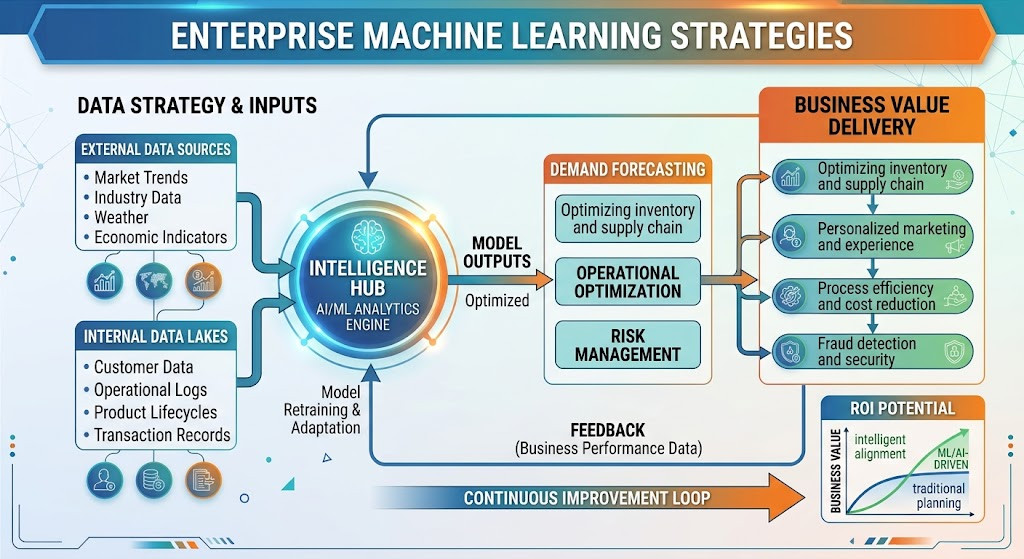
Predictive analytics also allows us to forecast future trends so we can be ahead of the game instead of behind. Analyzing historic data enables us to identify repeating patterns.. These patterns can be used for forecasting increases in demand during certain seasons, for the optimal management of stocks and for avoiding the enormous financial losses due to overstocking or running out of stock.
It also identifies customers who are on the verge of leaving your business, i.e. those exhibiting behavior characteristic of churn. By identifying a customer who is about to leave your business early enough, you can initiate a high-value retention campaign on an automated basis, designed to win this customer back. Staying ahead of the game by using data to anticipate what’s going to happen with your business instead of constantly managing it by looking in the rearview mirror, will allow you to stop chasing revenue and start scaling it.
5. Bridging the Gap: Finding Talent via GigMint
In e-commerce optization there is no such thing as “renewable time”. The process of hiring someone in-house (post job description, several rounds of interviews, bring candidates on board) takes weeks and even months. By the time the new in-house employee has been fully set up to work, the seasonal peak for which they were hired would have already come and gone. The traditional hiring process is simply not suitable for modern e-commerce companies.
The GigMint Advantage
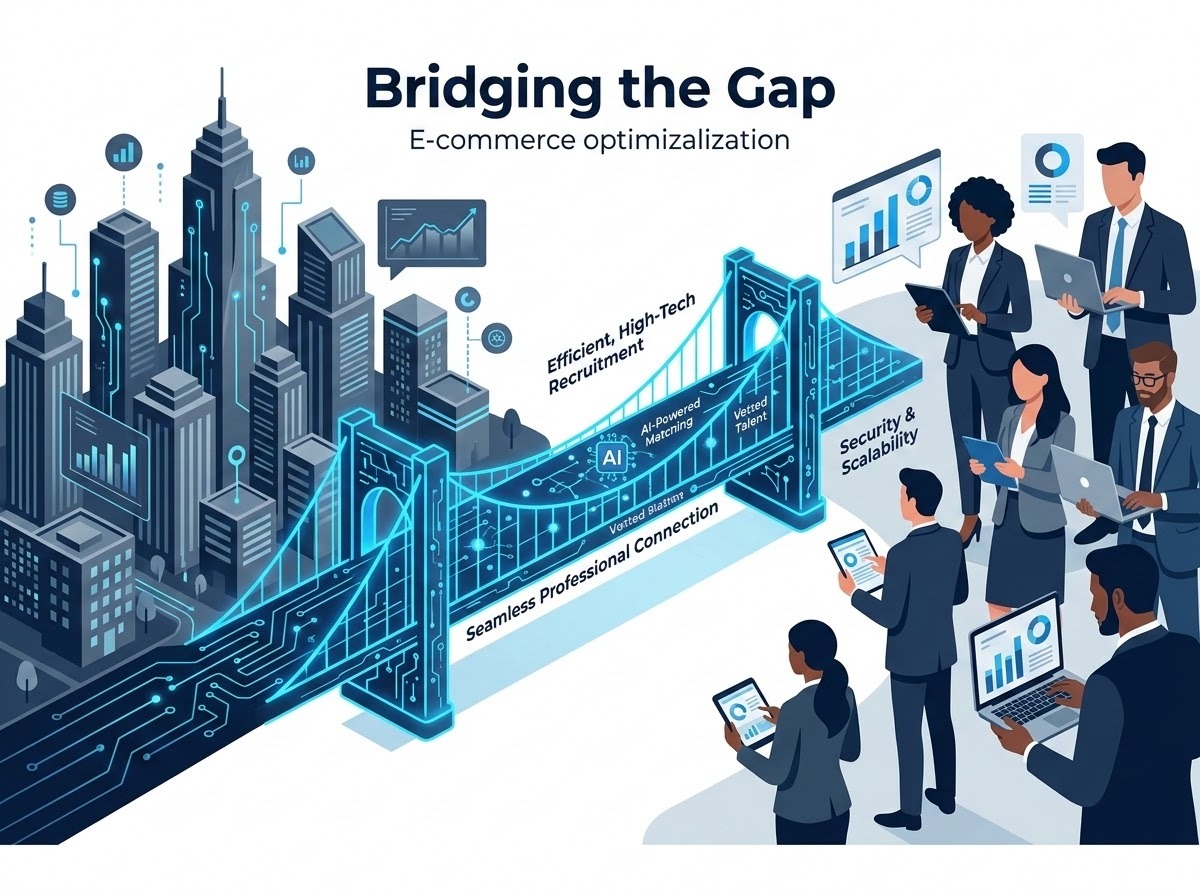
GigMint fixes the access problem for the marketers you need, to do the work you require, when you require it. Instead of sifting through piles of mediocre resumes from a variety of unknown individuals, GigMint gives you immediate access to the world’s very best freelance marketing talent, vetted for you and instantly available to integrate into your workflows as needed.
AI-Powered Matching
The GigMint Advantage. By utilizing a revolutionary new platform for connecting businesses with freelance marketing specialists of the highest caliber, GigMint enables you to cut through the detritus of the normal online hiring process. No more posting a job description and having to trawl through the endless resumes of those without the skills or experience required for your business’ growth.
You’ll be able to access only the top 1% of marketers – all of whom have been pre-vetted for you, meaning you can rest assured that you’re only ever contracting for the highest quality of work.
Security and Scalability
Scaling a team of distributed freelancers is a complex administrative challenge. GigMint has the back-end to manage such a team on your behalf. Our secure, built-in escrow system allows you to pay your freelancers for work done to a budget of your choice.
Our global payout system takes care of payment to your freelancers around the world. This allows you to focus on growing your e-commerce optimization business, while running a top performing team of elite data and online marketing specialists.
6. Case Studies: Data-Driven Victories (Hypothetical)
When it comes to online strategies, nothing can substitute for proof of concept. The following scenarios outline the two ways in which data can prove superior to mere theory.
Scenario A: The Abandoned Cart Crisis
A boutique online retailer found that the majority of their online shopping carts were being abandoned at the shipping selection page. After reviewing the numbers an 80% cart abandonment rate could have been fixed by lowering the price of the items in the shopping cart, or running a promotional code to discount the shopping cart, but that wasn’t the reason behind the lost sales.
After a further review of the exit-intent data and session replays it became apparent that users didn’t like being surprised by the cost of the shipping at the last minute. The data-driven marketer for this boutique retailer implemented a tiered free-shipping threshold strategy. Now customers will get free-shipping on orders when they purchase a certain amount of items in the shopping cart.
Initially the extra item a customer purchases to receive free-shipping is a small additional revenue stream, but because the items are already in the cart the AOV (Average Order Value) for these additional items will be greater than it would be if the items were purchased as a separate individual transaction. Within 30 days of implementation the retailer reported an increase in total revenue of 15%.
By creating a tiered free-shipping structure based on various order thresholds, the online retailer created a way to draw customers to purchase additional items, thereby increasing average order value while eliminating a painful surprise at the checkout process for customers. In less than 30 days, the boutique saw an increase in total revenue of 15% by treating something that would have been a cost center in the same way that marketers treat a variety of conversion levers in the online world.
Scenario B: The Ad Spend Optimization
An electronics retailer saw high volumes of traffic to their paid search ads, but rather than translating into profits, the activity was losing money – negative ROAS. Further investigation into the source of the problem revealed that mobile users were leaving the retailer’s website at a rate of four times higher than desktop users who visited the retailer’s website.
While the retailer’s ads were converting click activity into sales well for the retailer’s paid search campaigns on desktop, the mobile landing pages were so slow and poorly designed for a small screen that they drove most users away quickly. By focusing on the destination that users arrived at, rather than attempting to spend more to acquire traffic, the retailer was able to address a serious leak and, in doing so, stabilize the spend on their paid search campaigns while doubling the conversion rate on mobile.
To optimize ad spend the electronics brand first conducted a comprehensive digital marketing audit which showed that while their ads were achieving clicks there was a huge problem with the brand’s mobile landing page experience. The mobile page load time, design, navigation and checkout process all performed very poorly for mobile users leading to a much higher than average mobile site bounce rate of four times that of desktop users.
To fix this leak, the marketer optimized the landing page experience for mobile users which led to a 100% increase in conversions from mobile users. Crucially by fixing the destination of the ad spend (i.e. the marketer’s own web site) the marketer was able to stabilize the return on spend for paid search marketing at a level which was better than that of competitors. In other words, spend was fixed while increasing in conversion and therefore better in return.
7. Challenges and Solutions in Data Marketing
Most big challenges with a data-centric model can be categorized into three groups. First, there is the Data Silo Trap. Here, marketing, sales and inventory data is not combined, and thus no complete view of the customer’s journey through all channels is created. That way, all activities are not optimized.
-
Analysis Paralysis. It’s easy to get lost in a never-ending sea of data. Many experts agree that the worst thing that can happen to a business in this data-driven era is becoming distracted by a multitude of metrics. The solution to this problem is simple: filter out all the data that isn’t relevant and focus on the metrics that matter. For data-driven experts, there is nothing more important than the brand’s North Star metrics. These are the most important indicators of a company’s long-term success in terms of profit and customer retention.
-
There is the moving target of Compliance and Ethics. The Privacy regulations of GDPR, CCPA, and others continue to evolve allowing only targeting of users in ways that maintain their trust. Brands will require specialists to perform content and SEO audits on an ongoing basis to continually ensure that their brand is complying with evolving search engine algorithms as well as all laws regulating online marketing.
8. The ROI of Hiring Expert Freelance Marketers
By working with expert freelance marketers you immediately gain Efficiency in your organization. This is completely opposite to how it works with hiring new employees, who need 6 months to ramp up before they can be of any real value. They will require time to get up to speed with the tools of your technical organization. Top freelance marketers on the other hand hit the ground running with the tools of their trade, converting your unrefined data into workable growth strategies from the off.
-
With freelancers, you can scale up in a matter of hours or days depending on the circumstances. This means that when the time comes for your high-velocity events (such as Black Friday and Cyber Monday sales) you can bring in a team of specialized CRO and data Experts to work on your conversion as if it were their own business – and then scale back down once the event has passed to work on growing your regular sales in a lean and efficient manner.
-
The Strategic Depth is also enormous. Expert freelance marketers in particular have gained great experience in their field, have already solved various conversion problems for various industries and have a wealth of experience that they can also transfer to your company. The external view of a conversion optimization specialist, a specialist for A/B testing or a data-driven marketer in particular is unique and cannot be compared to the limited view of a fixed team. The outside view is necessary to also develop strategies that will also provide a competitive advantage in the future against new competitors.
-
The final key benefit of bringing in expert freelance marketers, as opposed to permanent employees, is cost-effectiveness. Instead of paying for a generalist who is able to contribute very little (often when not working at all), you pay for a specific outcome. When you engage in work with an elite marketer, you can be sure that your investment will lead to tangible returns. Scaling your spending in line with your growing revenue means that every single dollar that you spend is always delivering value, growing your revenue, in the most effective way possible.
9. The Future is Data-Centric
Data, in the shape or form of e-commerce optimization, is becoming the lifeblood of online trade in today’s fast-changing market. To survive, let alone thrive, brands will need to treat the data at their disposal as their most precious asset and then use that information with the help of human experts to unlock maximum potential. There is a huge gap between traffic and revenue and the only way to bridge that chasm is through the eyes of a data-driven marketer.
Stop guessing and start scaling your online business. Get the expertise you need to unlock your full potential as a marketer. Post your first project for free on GigMint and get connected with an experienced data-driven marketer who can help take your business to the next level.