How to Identify Machine Learning Use Cases: A Practical Guide
How to Identify Machine Learning Use Cases: A Practical Guide
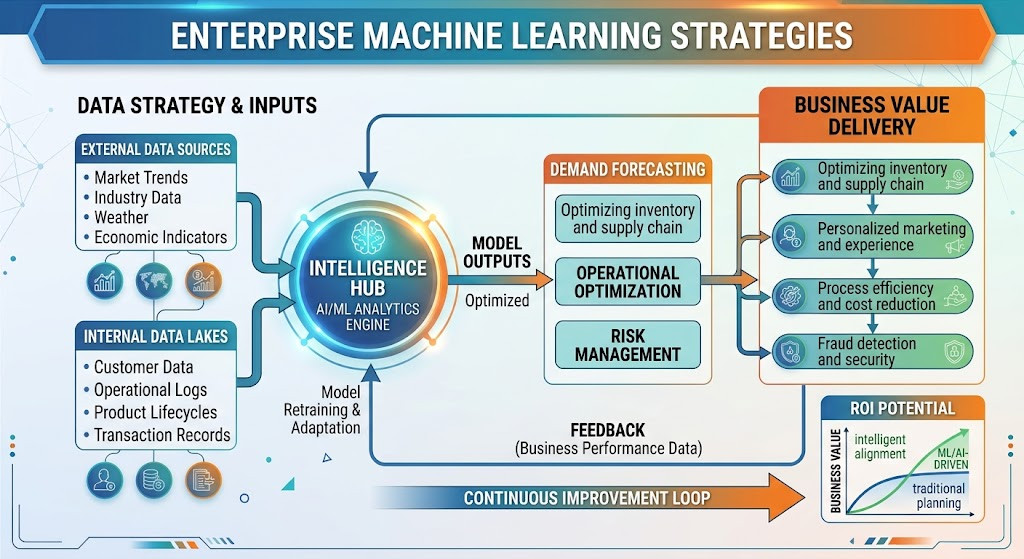
More than 80 percent of machine learning efforts within companies do not pass the pilot stage. This shocking number does not come about due to poor coding, faulty algorithms, or insufficient computing power. This is because the business problem being solved was the wrong one.
When trying to keep up with competitors, managers find themselves under tremendous pressure to deploy machine learning fast. The result is that they start pursuing the latest technology trends without thinking about the business processes.
When you embark on a project based not on your needs but because of your fascination with technology, it will be very easy for you to get stuck in pilot purgatory.
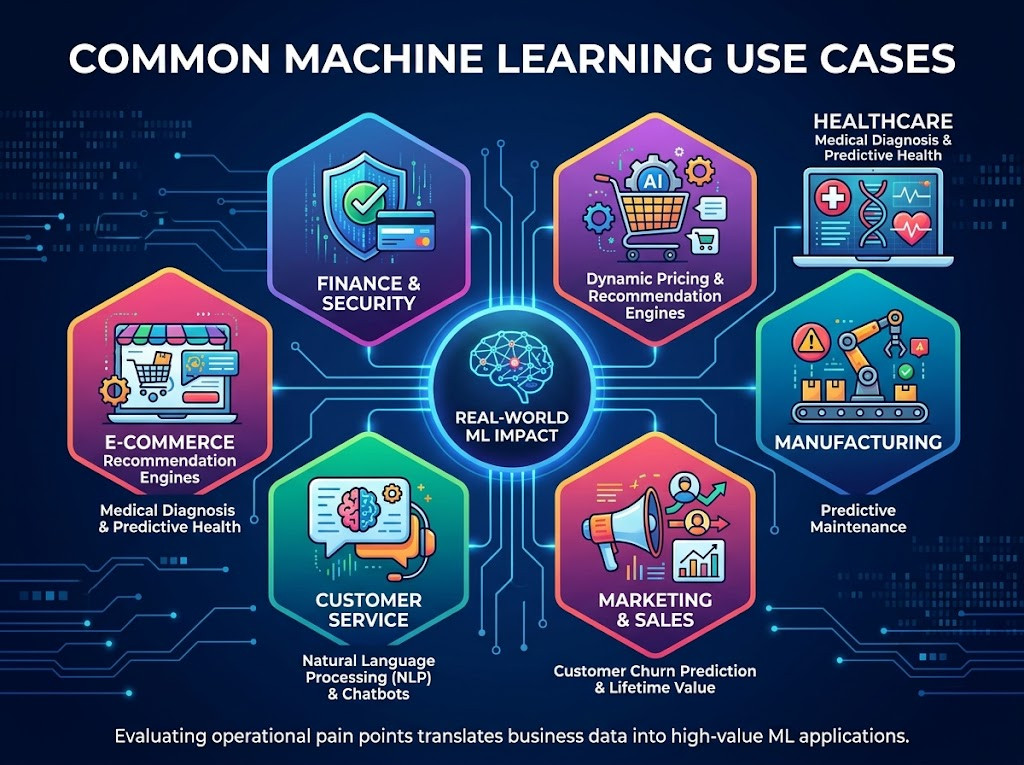
Your organization can find out those machine learning projects which have high business value through the creation of a framework for evaluation.
This guide helps you develop a process that is repeatable, which enables you to be able to identify machine learning applications with ease.
You will learn how to determine which problem areas are best addressed through traditional software and not machine learning. You will also learn how to audit your organization and determine data health and the difficulties of implementing an application.
Understanding What Makes a Good Machine Learning Use Case
One should understand the scope of applicability of machine learning versus that of traditional programming prior to any expenditure for data acquisition and structuring. Machine learning is not the panacea for all problems; rather, it is a particular technology that is applicable to specific problem domains only.
When to Use Machine Learning vs. Traditional Software
Conventional software uses explicit rules-based logic to operate. When certain inputs match criteria A and B, the output C is generated. The deterministic nature of this process makes it very useful for payroll programs, accounting systems, simple inventory systems, and conventional websites. Rules in these scenarios are known, static, and consistent.
Machine learning changes the approach completely, as the algorithm used in machine learning learns rules from data. Conventional software accepts data and rules as input and generates an output. Machine learning accepts data and targets as inputs and generates rules and predictions. Machine learning becomes necessary when:
The rule base becomes unnecessarily complicated for a human to manage: When writing code rules for fraud detection based on millions of transactions per day crossing national borders, you end up with a very fragile code base, prone to breakage.
The environment changes and must change dynamically: For example, dynamic pricing systems in e-commerce or logistics have to take into account changes in demand and supply chain delays, and even competitive responses.
The data is unstructured: Classic code finds it difficult to analyze natural language, audio, video frames, and sensor telemetry.
When you have a process that you can define in terms of a decision tree with explicit nested conditionals, you don’t need machine learning. What you need is sound software engineering. Machine learning is useful in situations where the patterns are too complex to write down in code.
Core Characteristics of High-ROI Machine Learning Projects
Machine Learning can be said to be best utilized by firms to solve those issues that repeat themselves and which can benefit from even slight progress.
For example, a bank analyzing loans would have its loan underwriters able to review just a few complicated loans daily. A machine learning classification system could look at thousands of routine applications in a matter of seconds, assessing their credit risk based on past defaults.
The key traits of high-ROI applications tend to be threefold:
High frequency of occurrence and iterations: These are decided on a number of hundreds or thousands per day, creating a cycle of continuous feedback with fresh information used to improve model accuracy.
Definite metrics: The problem faced by the business can be linked to some tangible metrics, which could include churn rate reduction, yield management or faster resolution times at the helpdesk.
Acceptance of acceptable probability of error: ML model results are probabilistic and not deterministic. The high-ROI application is the one, where a 90 percent accurate prediction brings tremendous business benefits and where a 10 percent error is tolerable.
Dispelling the Myth: Avoiding "AI for the Sake of AI"
One of the common pitfalls of executive teams is getting into vanity projects that are implemented in order to talk about artificial intelligence in earnings calls and marketing efforts.
The process begins by saying, "We should incorporate machine learning into our customer portal," instead of asking, "Why do we have a 15 percent loss of users when trying to complete a purchase in the customer portal?"
In order to avoid vanity projects, all ML initiatives will need to be put through the cost-benefit test before the modeling starts.
The cost-benefit test requires computing the cost of building, deploying, and maintaining the model, as well as its return. When a simple rule or an SQL query does 80 percent of what needs to be done for 5 percent of the cost of development, then the ML solution would be suboptimal.
Step 1: Conducting a Business Pain Point Discovery Audit
The process of determining appropriate opportunities for machine learning needs to start from the business perspective instead of the technical perspective. A comprehensive discovery audit needs to be done to identify the true friction points in the business process and translate organizational goals to an analytics problem.
Engaging Cross-Functional Stakeholders
AI/ML project failures frequently happen because of an innovation-driven approach to machine learning design in isolated innovation labs and without consideration for the end user’s needs. In order to find valuable use cases, assemble a team that will include representatives of three following areas:
Operations management, sales and customer service leaders who know how and where operations take place, what pain points exist in day-to-day routine and what the economic drivers of decision-making are.
Technical specialists who know about algorithmic limitations, technical peculiarities of models and pipelines and other things.
The individuals who make sure that the generated solution fits into the overall business strategy and works within existing business processes.
Conduct structured interviews and discovery sessions in each department. Directly ask the operations leaders about the daily decisions that take the most time, areas where there are always process delays, and the questions that they wish to be answered using their existing data.
Mapping Operational Bottlenecks and Inefficiencies
The mapping must focus on:
Manual data processing efforts: Where employees are involved in manually interpreting invoices PDFs, categorizing support tickets, and comparing line items in spreadsheets.
Decision-making processes that cause delays in customers’ journey since they are dependent on manual review and take time.
Problems in allocating resources in call centers, field service techs, and inventory in warehouses because of varying demands.
The process has to be recorded step by step to pinpoint the stage where there is friction and where machine learning can be of help.
Translating Vague Business Problems into Quantifiable Analytics Objectives
Business leaders speak of difficulties in terms of results, such as the need for better customer retention rates or decreased costs for maintaining the equipment. Data scientists will require well-defined mathematical formulas to create models.
The success of your discovery audit is contingent on mapping out general business objectives to specific data objectives:
Mapping from "Reduce customer churn" to prediction: Calculate the probability that customers will cancel their subscriptions in the next 60 days depending on their product usage rate, number of tickets created, and billing records.
Mapping from "Reduce factory downtime" to failure prediction: Categorize equipment failure probability in the next 100 hours of operation based on vibration and temperature measurements collected by embedded sensors.
Mapping from "Optimize ad budget" to CLV estimation: Calculate the 12-month Customer Lifetime Value of new customers acquired via ads at the point when they sign up on the company’s website.
Step 2: Assessing Data Readiness and Availability
Data serves as the backbone for machine learning processes. No matter how sophisticated the algorithm may be, without complete and accessible data, there will never be any way to obtain value from it. Prior to approving a project, make sure that you have the right data foundation.
The Fuel of ML: Quality, Volume, and Accessibility
Data readiness evaluation goes far beyond total data quantity. There is no use of millions of records with no proper data structure, wrong formatting, or missing values. Check your data assets according to three main criteria:
Volume: Is the number of historical samples sufficient for an algorithm to detect patterns? If linear algorithms need just thousands of lines to learn, neural networks, in turn, will need hundreds of thousands of records to achieve the target performance level.
Quality & Consistency: Is the historical record correct, consistent, and formatted? Different date formatting, duplicated records, wrong categorization, or missing values need serious processing that can easily delay the entire project.
Accessibility: Can data scientists get automatic access to the needed data source? Locked within legacy systems and accessible only to one department can become a great challenge to development.
It is important to know what the difference is between having data and usable data. To have ten years' worth of data in unstructured form of PDF invoices stored in various cloud folders does not mean the same as having structured data queries from transaction records.
Identifying and Breaking Down Data Silos
The enterprise’s data typically lives in siloed systems belonging to departments. Marketing records the customer interaction in the automation system, sales records the deals in the CRM system, finance manages the transactions through the ERP system, and customer support records their interactions in an external helpdesk portal.
A machine learning model will need to draw from many different sources of data for high-value uses. Interaction data from marketing, usage data from the platform, billing data from the ERP, and customer support data are some of the data required to predict customer churn, among other types of data.
Evaluating Data Labeling, Cleanliness, and Bias Risks
Supervised learning algorithms need labeled data—past instances where the result is known and labeled, for example, whether past transactions were fraudulent or not.
If your company doesn't have any labeled past data, take into account how much time and money you will need to generate such data. Data labeling can be quite an effortful activity involving specialists who will need to look through and label past instances manually.
Check the past biases that may be present in datasets. Machine learning models learn from past decisions. In case there was some discrimination in past human decisions regarding hiring, lending, or setting prices, the machine learning algorithm trained using such data will learn these biases too.
Step 3: Evaluating Technical Feasibility and Complexity
After it becomes apparent that there is business value and data readiness for a project, the technical feasibility should be assessed. This consists of determining if the project can really be built and supported by your team with existing tools and personnel.
Complexity vs. Capability: Choosing the Right Model
Another trap to avoid in enterprise machine learning is over-engineering. By default, teams apply overly complicated deep learning models and language models when the problem at hand can be solved using simple tabular algorithms much faster and better.
Low to medium complexity models include linear regression models, decision trees, and boosting gradient algorithms like XGBoost. Such models are very good at solving tabular data tasks, such as scoring for fraudulent transactions, sales forecast, churn prediction, and other similar problems. Such models are fast to train, use less computational power and produce easy-to-understand outcomes.
High complexity models include deep learning models, computer vision models, and transformer-based language models.
These models are required when the task involves unstructured data and such tasks as image recognition, video processing, natural language processing, and others. High complexity models require huge training datasets, special GPU infrastructure, and highly skilled engineers.
Models that can produce the necessary business outcome at the minimum complexity level should be preferred. A simple model, which gives an 88% accuracy and can be implemented in just four weeks, is always worth more than a complicated model which provides 91% accuracy in six months time.
Infrastructure and Resource Requirements
Building the model for machine learning is just the first step towards the process of development. To operate the model within the workflow, MLOps infrastructure is required.
Technical viability is estimated based on the total lifecycle resources required:
Internal Staffing versus Outside Services: Does your organization have the necessary experts in the form of data engineers, machine learning engineers, and MLOps engineers to create the solution? In case you don't, you need to assess outside development firms or ready-made AI solutions for enterprises.
Costs of Compute & Storage: Take into account the recurrent cloud expenses related to the training, processing, and hosting of your model.
Maintenance and Drift Detection: Contrary to regular software, the quality of a machine learning model deteriorates over time due to the changes in the environment—it is called model and data drift.
Regulatory, Compliance, and Ethical Considerations
There exist enterprise sectors in which there is a rigid regulatory environment surrounding automation. There is always an element of explainability and non-discrimination associated with decision-making in industries such as healthcare, finance, insurance, and human resource management.
In the case where machine learning makes a decision not to offer financing or even rejects a medical diagnosis, the decision will be questioned by both the regulatory authorities and the client.
Most of the time, deep learning algorithms act as black boxes making it very difficult to attribute any decision made by the machine. In industries with strict regulations, there can never be any compromise on accuracy and explainability of the model.
Please note that it is highly essential to comply with regulations concerning data protection like GDPR or CCPA when there is consent from the users.
Step 4: Prioritizing Use Cases Using an Impact vs. Feasibility Matrix
You would already have a number of possible applications of machine learning after completing discovery audits and feasibility studies from several departments. The task that comes after this will be prioritizing these concepts for their strategic relevance.
Establishing Scoring Criteria for Your Framework
In order to score the use cases objectively, it is important to come up with a standard scoring framework that is divided into two primary categories - Business Impact and Implementation Feasibility.
Each potential project should be scored according to the following criteria from 1 to 5:
Business Impact Scoring Criteria
Monetary Value - Potential to generate income or reduce costs directly.
Alignment with Company Goals and Strategy - Degree to which the project aligns with the company’s overall goals.
Time-to-Value - Speed at which value is created; preference for the projects that can bring some benefits within 3 to 6 months.
Implementation Feasibility Scoring Criteria
Availability and Quality of Historical Data for Training the Model.
Algorithm Complexity.
Balancing Quick Wins and Strategic Long-Term Transformations
Quick Wins (High Impact, High Feasibility): This group represents highly impactful and feasible projects which you need to give top priority. They provide quick returns on investments, make executives confident and show business value of ML for the company.
Strategic Bets (High Impact, Low Feasibility): Projects which create competitive advantage but demand considerable upgrades in the infrastructure, data cleaning, etc. Place those on multi-year roadmaps while gaining capabilities in Quick Wins.
Fill-Ins (Low Impact, High Feasibility): Feasible projects with low business impact that provide minimal improvements. These need to be done only if the development team has spare capacity.
Thankless Tasks (Low Impact, Low Feasibility): Complex and demanding projects with low business impact. Get rid of those from your product backlog.
Creating a Weighted Scorecard for Objective Evaluation
To inject some mathematical form into your prioritization process, develop a weighted scorecard where you assign percentage weights to each of the criteria according to your organization’s priorities and then calculate a composite score for each of the proposed use cases.
For example, allocate weights of 25 percent for financial value, 20 percent for data readiness, 15 percent for strategic alignment, 15 percent for speed of value, 15 percent for technical feasibility, and 10 percent for organizational adoption. Each of the scores is multiplied by its respective weight in order to generate a score out of 5.
With this approach, projects that offer slightly less financial benefit will score higher because of their high data readiness and easier technical implementation, enabling them to go into production much sooner than other projects.
Step 5: Building a Proof of Concept (PoC) and Measuring Success
As soon as you identify the most important use case for implementation, proceed to implementation following the risk management process that is iterative in nature. Do not build any full-scale production infrastructures initially.
Establishing Clear KPIs Before Coding
Prior to starting coding and training models or transforming data by technical teams, make sure that success metrics are defined clearly.
This should cover both technical performance metrics (for instance precision, recall, F1 score, and latency) as well as business results metrics (like revenue growth, cost of customer acquisition, reduced labor hours, and margin improvement).
If the accuracy of a trained model is 95 percent, then it is technically a success, but if it doesn’t help in reducing the number of hours, operational costs, or generating revenues, then it means that the project failed from the business perspective.
Scoping a Minimum Viable Model (MVM)
Limit the scope of your initial Proof of Concept to be as constrained as possible. Build an MVP - a working model that is intended to test assumptions based on offline historical data.
In order to limit your MVP:
Utilize historical data dumps rather than building real-time pipelines for data ingest.
Start by validating against more basic machine learning algorithms such as logistic regression or basic decision trees before validating against more complicated neural nets.
In place of performing validation of the predictive model for the whole organization, do so by using only a small fraction of that.
Knowing When to Scale, Pivot, or Kill a Project
Scale: MVM passed or even outperformed the technical accuracy threshold as well as business ROI. Commit the capital and engineering effort to design production-ready ML pipelines and integrate APIs within core business workflows.
Pivot: The historical data exhibited a good predictive potential, but the accuracy did not meet the viability criteria. Adjust the project scope by adding new data features or changing the target labels, and experiment with model architecture.
Kill: The predictive value of the dataset is low; the cost of feature engineering is high compared to the potential return on investment; or the output cannot be integrated into the workflow by operations people. Shut down the project.
Closing down a failing project at the PoC stage is not a failure, but rather an effective validation process that helps avoid unnecessary investments. Abandoning a failing project after eight weeks allows you to save several months of engineering time spent on building a failing solution.
Final Thoughts
Machine learning use case identification and implementation are essentially exercises in business strategy.
Those enterprise teams who consistently drive great value out of their investments in artificial intelligence are not always the ones who have access to the biggest budgets for computing resources and the most complicated deep learning algorithms.
They are the teams who are running rigorous evaluation frameworks to solve business problems.
Using a proper discovery audit, data assessment, technical assessment, and prioritization via weighted matrix, you will be able to cut through all the market hype and identify valuable opportunities.
You can start small and achieve a Quick Win that creates momentum and drives home the business value. These wins will then help you set up your enterprise data framework and grow your MLOps skills in order to implement a successful data-driven strategy.
To fast track your ML journey and uncover high-value AI opportunities for your enterprise infrastructure, reach out to our expert strategic advisors and engineering teams at Gigmint.AI.