Full-Stack Developers vs Specialized Developers
Full-Stack Developers vs Specialized Developers
Founders hit Founder’s Friction (i.e. the point where the generalist that builds the initial prototype for the startup of the founder turns into a problem for that founder) at some point. The team that built the first prototype for the startup of the founder becomes a problem as the product of that startup starts to gain traction.
This problem becomes very visible as the generalist focused startup begins to accumulate technical debt, start to see feature delivery slow down dramatically as the team size increases, and have system failures as traffic to the site increases. The simple and agile developers that were required to rapidly pivot off of a simple MVP to develop the mature product are unable to handle the increased complexity of the architecture of the mature product.
Deciding between full-stack developers and specialized deep engineers is more than just hiring. It is a strategic decision that determines the ceiling of your product, the velocity of your team, and your competitive advantage in a crowded market over the long haul. Will you try to keep your generalist founders running at full speed as a team of specialized engineers, or will you be a startup of specialists?
2. Defining the Talent Landscape: Full-Stack vs. Specialized
What are Full-Stack Developers in the Modern Era?
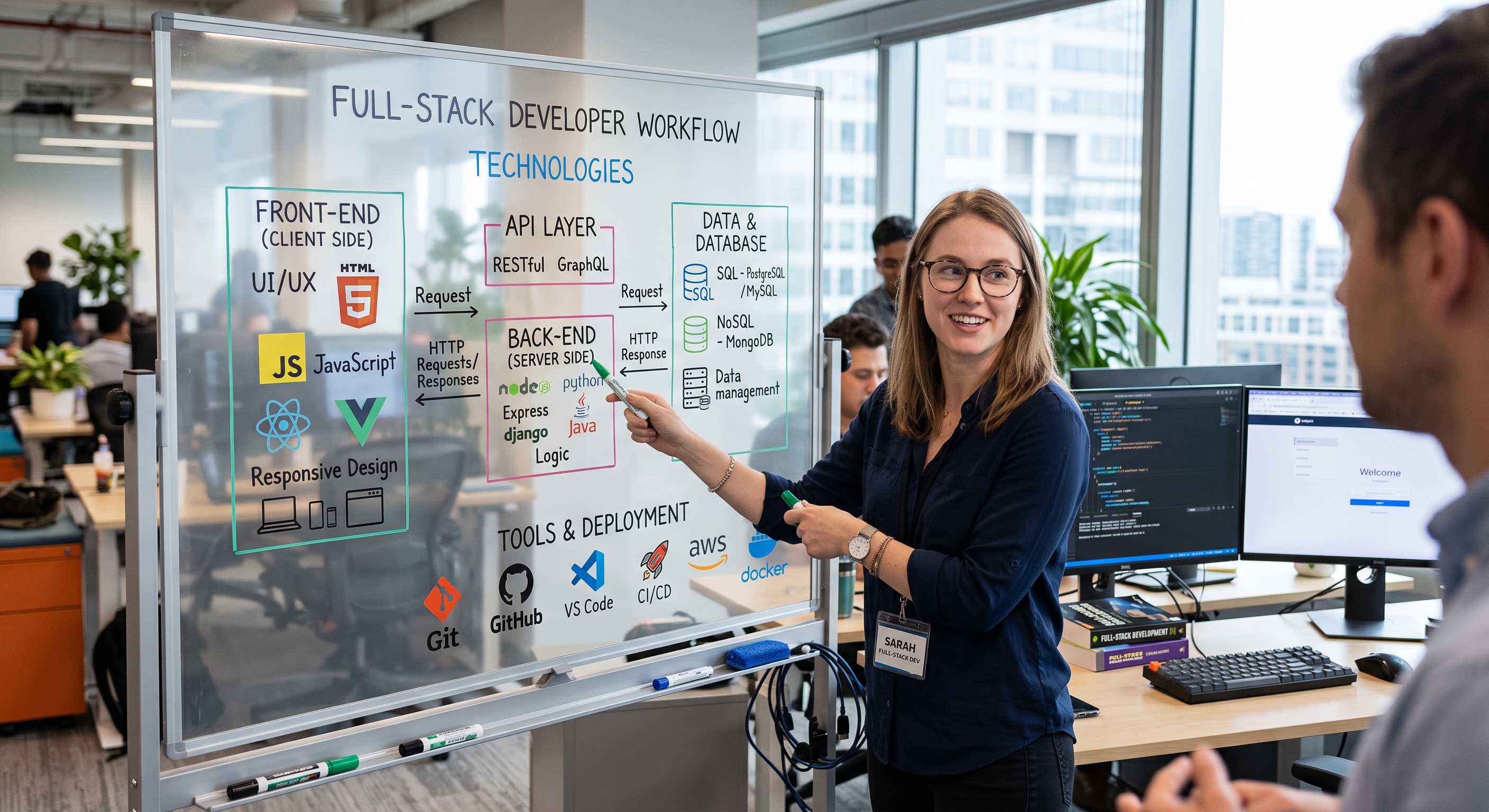
Full-stack developers of today are no longer defined by the elementary knowledge of HTML, CSS, and SQL, of old. Full-stack developers of today are the architects of agility, able to deal with the complexity of large-scale applications by way of orchestration of numerous APIs, as well as manage numerous elements of cloud infrastructure such as AWS or GCP.
Above that, they are able to complete entire features end-to–end. Their biggest strength – a product first approach – allows them to easily map a single button on screen back to a database schema, cache and even network latency.
As such, early-stage companies can highly benefit frhttps://gigmint.ai/om working with full-stack developers, as this individual acts as a glue to connect all required steps and translate abstract product requirements into fully functioning software while at the same time preventing substantial communication in larger teams.
The Specialized Developers: Deep-Dive Mastery
But then there are the specialized developers. If you need a React guy, a Go/Rust backend performance specialist, a Data scientist, or a DevOps site reliability engineer, then this is your generalist just won’t cut it. As your product matures, good enough solutions start to create brittle architecture.
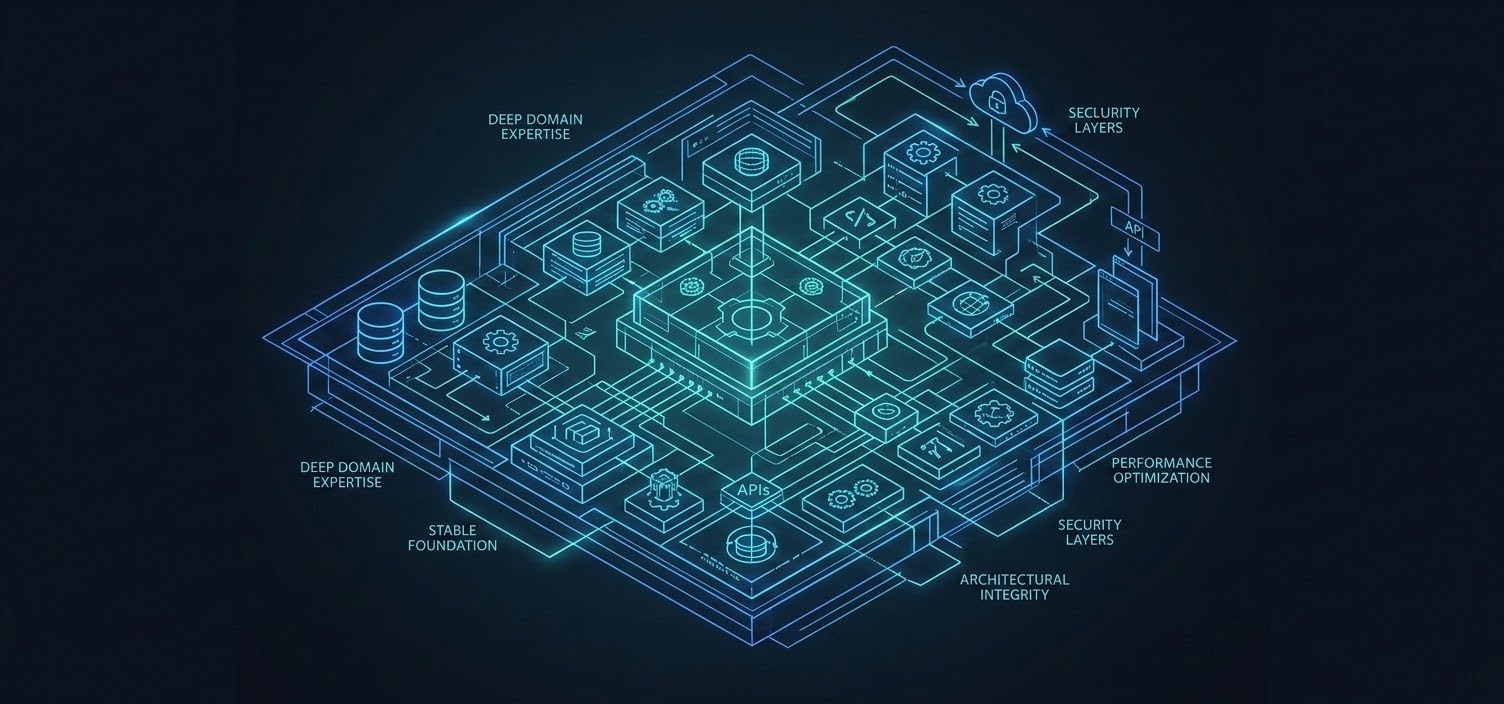
But specialists thrive in such complex environments and are very good at integrating sophisticated AI, building out high-concurrency microservices, or creating massive data visualizations. The core of the expertise of specialists in the different domains is their domain-specific knowledge.
They know the details of their respective fields of activity. This means that in addition to typical application cases, they are also familiar with special cases and understand better than generalists possible bottlenecks in terms of performance as well as security-related vulnerabilities.
Thus, specialists have the expertise of a surgeon and are as versatile as a jack-of-all-trades is not. Instead, they have the in-depth knowledge that is required to build the bases for products for thousands or even millions of users.. While the generalist creates the first version of your dream, the specialist makes sure it doesn’t collapse under its own weight.
3. The Case for Versatility: Why Startups Bet on Full-Stack
Speed and MVP Development
High-stakes environments such as pre-seed / early-stage startups are where speed is the only currency that matters. With product-market fit being the most critical variable in these environments, hours spent in communication debt (i.e. handoffs between frontend, backend, and infrastructure teams) are effectively taken away from iterations of the product based on customer feedback. The full-stack developers are the startup’s most critical asset, enabling speed and MVP development.
The biggest advantage of having full-stack developers in the early stages of a startup is that that person can control the entire lifecycle of a feature. That means the same person can design the database, create the API and implement the user interface of a feature. Because that person has all the knowledge of the stack there is no communication overhead to discuss a UI feature with a backend developer. That saves a lot of time and enables the startup to ship features in days instead of weeks.
However, for the first few months of a startup, until a team is large enough to have full-time specialists for the frontend, backend, and for the infrastructure, the full-stack developer is the greatest asset that will be the most able to facilitate the rapid prototyping that is required to hit MVP and to start to get a sense for where the product is going to land with customers.
The full-stack developers will be able to rapidly prototype and then debug and then refactor individual features, and then get those features out the door as quickly as possible in order to start to get some data points around how customers are going to react to the various features of the product.
As the code is being written for an MVP, the code is going to get thrown away in a matter of weeks, and then the following week or two of code is going to get thrown away, and so on, until the team starts to get a sense for where the product is going to land with customers.
Resource Efficiency for Early Growth
Developers who specialize in full-stack development, also known as “Swiss Army Knife developers”, have a unique quality – they are extremely resource-efficient. The cost of headcount for bootstrapped and seed-stage startups is extremely high.
A developer who can solve problems across the full spectrum of a product to reach the market faster, has the highest ROI per salary dollar. This is because they release so much more value per developer than other teams, and also release value much faster. The founder’s time is saved by not having to manage a large team of specialists.
Full-stack developers also help to create the best cross-functional collaboration, because they know what the database can handle. They are also the best people to discuss early UX designs with and to critique them for being too idealistic. Full-stack developers can translate abstract user needs into reality with minimal technical detours. Early on, such a versatile team member is not a nice to have but rather the key to a long runway and high product velocity for a bootstrapped or seed-funded company.
4. The Case for Depth: When Specialized Expertise is Non-Negotiable
Solving Complex "Deep-Tech" Challenges
Good enough engineering in early phases of product development will hit catastrophic bottlenecks as you scale out a high-frequency trading platform, real-time data visualization application, or AI-based product. These systems are not simple state management problems to be solved by a skilled developer. They are physics problems of network latency, database locking, and compute intensity that require a distinct domain expertise.
Performance specialists have years of experience and develop an intuition based on the sum of thousands of hours of focus on performance. Someone trying to debug a memory leak in a highly available, highly available cluster of microservices can be stuck for days, while a backend performance engineer has seen it before and has all the answers within minutes.
Importantly, they build for the long term from the very beginning, and in doing so, implement architecture, caching and data flow optimization that prevents that infamous big rewrite. A big rewrite is a term that strikes fear into the hearts of any software development team.
A massive, time consuming and morale crushing initiative to write a large part of the product from scratch, often taking months or even years to complete, all while the rest of the product development team is stuck in neutral, watching as the foundation of the product collapses around them.
Reducing Long-Term Technical Debt
Technical debt is a silent killer for scaling startups. In the beginning stages of a startup, technical debt often builds up unnoticed. It’s the specialist developers who can mitigate the largest part of this debt. They write code that not only functions properly, but is also maintainable for other developers.
Their code is far cleaner and is better maintained because of the additional layer of documentation and modular design that they implement. Most importantly however, is the understanding that they have of the edge cases, that other developers may have totally overlooked, and it is these failures at edge cases that can cause the biggest problems for your system as it continues to grow and you enter the scaling phase of your startup’s development, moving from the MVP (Minimum Viable Product) phase to being the market leader in your space. In short, they get the how. The generalist gets the what, but the specialist gets the how, and the how is crucial to keeping your product stable as it continues to grow and develop.
5. The Decision Matrix: Choosing Based on Growth Stage
|
Attribute |
Pre-Seed / MVP |
Series A |
Enterprise / Mature |
|
Primary Goal |
Survival and finding product-market fit |
Rapid scaling and feature delivery |
Outdoing competition and long-term scaling |
|
Nature of Work |
Building the initial product |
Evolving from building to maintaining |
Deep optimization (Performance, Security, Infrastructure) |
|
Hiring Mix |
100% Generalists / Full-stack |
Hybrid (Full-stack + Specialized Leads) |
~80% Specialists + Strategic Generalists |
|
Key Strategy |
Maximize speed and minimize communication time |
Prevent architecture from collapsing under tech debt |
Leverage deep-knowledge experts as a main differentiator |
6. The Hybrid Model: Engineering a High-Performance Team
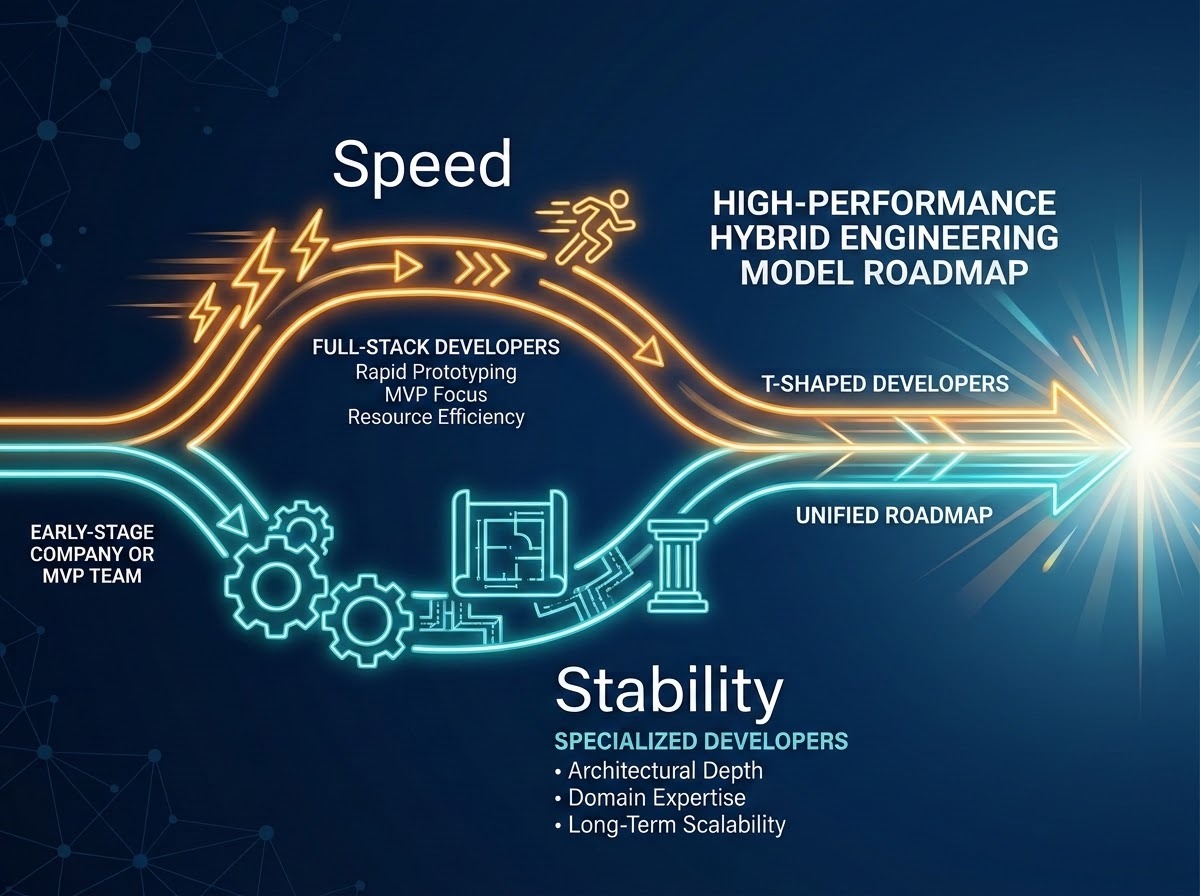
Rather than choosing to rely on full-stack engineers or deep-specialist engineers, as an organization matures it moves out of a simple full-stack / deep-specialist dichotomy and into a Hybrid Model that allows it to sustain its own fast growth by getting the best of both worlds.
Full-stack generalists can hit ceilings because, even though they are able to build and ship features quickly, they don’t have the same kind of deep domain expertise to deal with problems that are rooted in very specific parts of the system. Meanwhile, deep specialists can create siloed departments where, even though they have the deepest expertise in their particular domain, they are not able to get work done as a result of all the handoffs and increased communication required to complete tasks.
The Hybrid Model seeks to strike the right balance between the strengths of both models. The core of the Hybrid Model is the T-shaped engineer. These are individuals who have a solid grasp of the entire technology stack but also possess significant, in-depth knowledge of a particular domain.
Teams of high performing hybrid engineers would consist of adaptable generalists, supported by domain experts, such as a database optimization specialist, a cloud architect, or a site-reliability engineer. These specialists would become the architectural force multipliers for the generalists, help to build platforms and define best practices for them to follow. In doing so, they can solve problems to last, and allow the generalists to focus on delivering value to customers quickly.
First, these engineers act as the main ‘glue’ for the company: They can develop a feature from end to end while integrating several systems, and deliver it to users in a great overall experience. Specialists on the other hand act as architectural force multipliers:
They can build internal platforms, define best practices and ensure that, in terms of technology, the company has the best foundations to grow. Generalists are able to keep delivering at high speed while Specialists focus on solving problems in depth and building lasting solutions. The former enables the delivery of features while the latter ensures that the underlying systems are scalable and robust enough.
To support rapid scaling, the Hybrid Model of organization is intentionally built to be highly symmetrical and thus very flexible, yet at the same time robust enough to withstand even the biggest of changes in the market. In a world of rapid technological progress, and in the face of ever increasing competition, the biggest challenge for an engineering organization is to continuously deliver high quality software to customers.
This is possible only when the organization can respond in a very short span of time to changes in technology and in the market. The Hybrid Model enables such rapid response by balancing the architectural depth of the deep specialists with the operational breadth of the generalists.
Thus, the biggest strength of the Hybrid Model is that it is able to deliver high quality software while at the same time continuously improving the internal architecture of the organization. This makes the Hybrid Model a powerful future-proof model for building world-class software.
The T-Shaped Developer Strategy
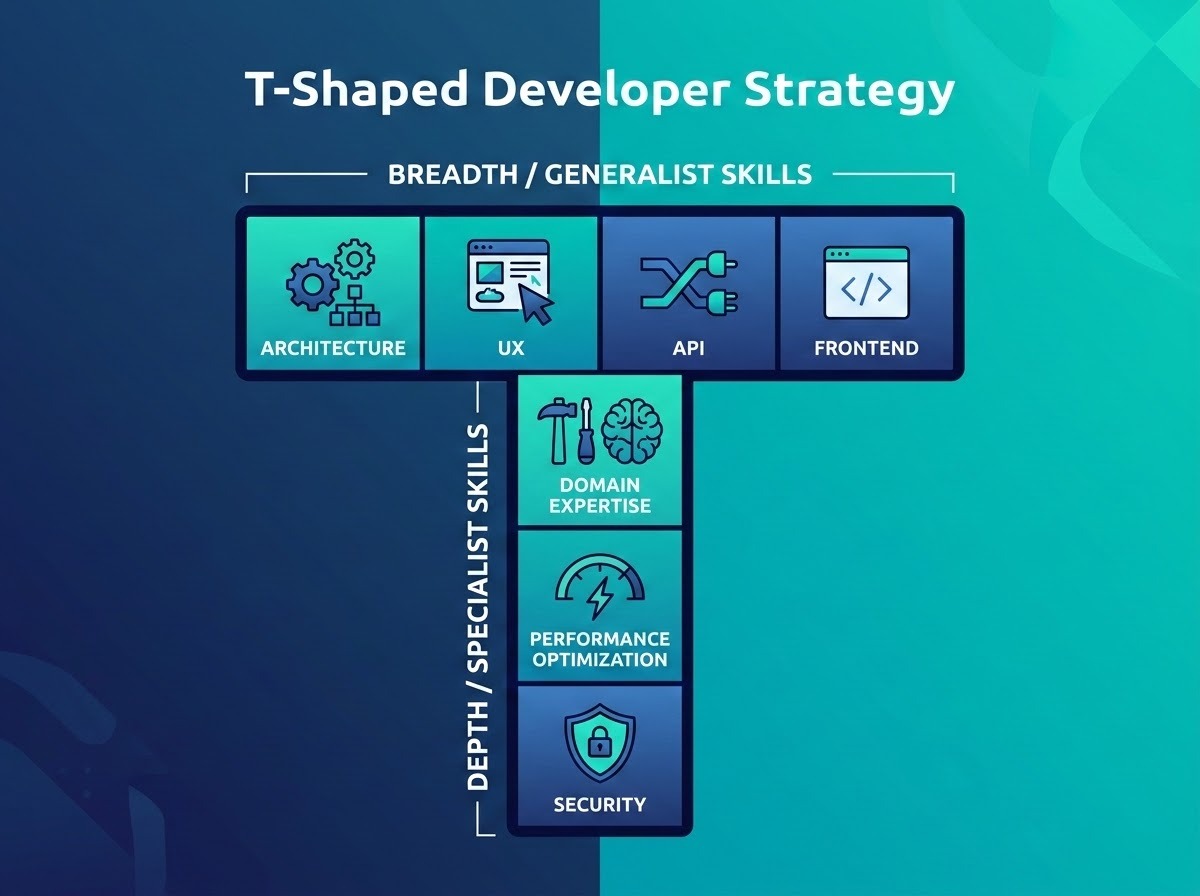
The core of the Stack model is based on the idea of T-shaped developers. These are people who have gained enough knowledge about different layers and disciplines of software development in order to work with people from other departments and backgrounds, but have also delved very deep into one specific area of software development.
In other words, the horizontal bar of the letter T represents their general knowledge of the software development stack, while the vertical bar represents their deep specialism in a certain area, such as database-optimization, security, or front-end accessibility in web development.
Hiring T-shaped developers is your ultimate scaling hack. The horizontal part of the T allows them to communicate with other parts of the team effectively (no more silos and friction in large organizations), and the vertical part allows them to dig deep into very complex technical problems and solve them (no more forking the team for a single roadmap-blocking bug).
When interviewing for T-shaped developers, you want to look for people who have a) deep mastery of a particular area of the stack, and b) also show a) curiosity and b) reasonable competence in other areas of the stack. These are the conduits of the team: they can debug a subtle issue in the API, explain it to a PM, and also think about the necessary architectural changes to support their fix in the long term.
The "Feature Team" Framework
Once you have created these hybrid thinkers they need to be placed in the right environment, the Feature Team. Traditional organizations structure their engineers by functional areas (Frontend, Database, etc.). This will lead to a bureaucratic organization that does not efficiently deliver products.
On the contrary, to foster high performance, engineers must be deployed in cross-functional teams, called Feature Teams, in so-called pods, which are organized to tackle business outcomes, such as improving checkout conversion or reducing latency for data processing. A high-performance Feature Team is akin to a product in itself: it comprises generalists (full-stackers) who represent the Why of a particular product and drive speed.
But they are supported by specialists, who, in the process of bringing a product to life, represent depth of technology, security, and scalability. A hybrid engineering department, of high-performance Feature Teams, ultimately works as a unified high-performance engine for rapid innovation as well as for architectural excellence.
.
7. Actionable Implementation: How to Pivot Your Strategy
Audit Your Current Stack: The stack is designed to address a particular bottleneck in your organization. Teams often struggle with Feature Delivery Velocity or Communication Debt which is to say that the organizational friction can be so great that you’d benefit from having a full-stack developers versatile team to close the loop.
On the other hand, there are teams struggling with system fragility, with outages, with technical debt. And in these cases the root cause of the problem is architectural and you need to bring in specialists that are able to re-engineer the foundation of your system in order to scale.
Hiring Checklist: From whiteboard to real job – Distinguish between true full-stack developers and generalists on a diet as well as between specialists who really know their stuff and ones who learned a few tools in a tutorial or part-time course. In case of the “real” full-stacker you will be able to test his
Product intuition: How does his code change the usage of a web page and the data model below? A true full-stacker connects the dots. The specialist on the other hand can easily learn tool stuff within a short time. What you have to test is his deep troubleshooting skills. How does he decompose a system, which are the edge cases of a system, failure modes and performance trade-offs? How does he come up with a diagnostic for a problem and – step by step – solve it.
Retention: A retention strategy is needed for both full-stackers and specialists. Specialists need to connect their deep, invisible work to real user benefits. Full-stackers need to have variety in their work and be able to own a full feature from start to finish. They need to be able to avoid being turned into ticket processors doing the same thing over and over.
8. Conclusion
Architecting a sustainable growth engine is more than filling a headcount. As companies grow through the stages of the growth matrix, the archetype of the best developer to hire changes dramatically. While the full-stack developers are the best asset to bring to the sprint to product-market fit, the team of specialized experts is what will carry the company through the long marathon of scaling.
By understanding where the company is on the growth matrix, a founder can begin to build out a team of the right developer archetypes to build resilience against failure. Audit the current roadmap against the growth matrix today and then start hiring for the future that the founder intends to scale, before the next system failure forces their hand.