How to Vet and Hire a Web Designer That Converts.
How to Vet and Hire a Web Designer That Converts.
The High Cost of "Pretty" But Non-Functional Design
A visually striking website that fails to generate leads or sales ultimately provides little business value. When businesses put the design first, they can often sacrifice the web site’s ability to convert its visitors to paying customers. This kind of design is only good for your portfolio. But when it comes to actually driving traffic and making sales, it falls flat.
When it comes to website design, many businesses inadvertently employ web designers to create an aesthetically pleasing site which will subsequently gain leads. They’re often taken on based upon initial design impressions and never quite deliver in terms of overall web design performance. There are far too many examples of sites that look great in portfolio but poorly online in terms of traffic, high conversion rates and return on investment.
Your website's primary lead generation and customer acquisition tool, ready to convert leads into customers at all times. If your current website design is not able to do any of the following: close deals; teaches; guides then it’s not functioning as intended. Your company will need a designer that understands the power of design in relation to the work that they do, above aesthetics and create effective designs that enable online conversions.
This guide covers everything you need to know in order to find the web designer who bridges creative web design with conversion based web design. In this post we will delve deeper than just a standard list of how to hire web designers and go through each and every step in order to find the designer for your project who will actually close the deal for you in the end.
1: Internal Preparation — Defining Your High-ROI Vision
Preparation of one’s own company is crucial and has the highest return on investment before browsing through the portfolios of potential web designers and sending out RFPs. Turning the mirror to one’s own organization without clear vision when hiring a designer is similar to hiring an architect without a blueprint for a new building. Such an architect would perhaps build a beautiful house but one that is of no use for its new owner.
Defining Your Core Conversion Goals
So what are you trying to achieve by hiring a web designer? Will your website be a lead generation machine for B2B inquiries? An e-commerce site focused on lowering cart abandonment? A content site where the main conversion is getting people to sign up for your newsletter? Where users spend the most time on your site?
Translating specific conversion goals into a project scope is an important way to generate the right type of portfolio samples. By first defining a specific set of conversion-focused goals (like growing demo sign-ups), you give designers a framework for designing for specific metrics. Unlike a typical ‘redesign’ project, where most designers focus solely on looks, projects where the core scope revolves around measurable conversion goals attract designers who also can design to convert as well.
Establishing Realistic Budgets and Timelines
In most cases there is a big difference between a redesign of a website and a new high-converting design. A new design can be based on template modifications or can be a completely new conversion-oriented design which is based on a lot of user research, many wireframes, A/B tests and refinements of the design in cooperation with the customer. High converting websites need a lot of work and the budget as well as the expected results have to be adapted accordingly. Also the time frame for a successful relaunch has to be realistic.
Be realistic about your project schedule and plan the important milestones, such as user testing of the site after its launch and further refinements for optimization and increased conversion. When your budget is small, it makes sense to develop a website that is scalable.
2: Finding the Best Candidates — Locating the Best Talent
Now that you have planned your goals and budget, you may start looking for the best web designer. There are many of them on the market today; whether they are freelance professionals or large companies, it may take some time to find someone who would be interested in working on your project.
However, it is not enough to find someone who is available to work on your project. You must also find someone whose way of working is suited to the complexity and strategic nature of your project.
Agencies vs. Freelancers. Choosing the Right Scale
Whether to choose a web designer (independent specialist or large web design agency) for your project, depends on a number of things. Firstly, deciding between a full-service agency and a single freelancer is rarely a case of who is best for the job. More importantly, it depends on the nature of your project.
-
The Full-Service Agency: When your project encompasses complex backend integration and requires the operational management of an ongoing SEO initiatives, a full service agency would likely be best suited to meeting your needs. These organizations consist of many copywriters, UI/UX strategists and web developers who can serve as a one-stop-shop, thereby providing a host of additional advantages to their clients such as reliability and the increased stability found within large organizations. Naturally, the additional overhead of an agency comes at a higher price, but most find this to be well worth the added benefit of increased expertise when put up against a solo designer of lower standing.
-
The Freelance Specialist: For a highly defined project such as a set of landing pages or the redesign of a major conversion funnel, you’ll find a top class freelance specialist is the best person for the job. Access to work as you’ll get direct access to the creative person behind the design, you’ll cut through the middle men which leads to less communication and usually a more competitive price for the quality of work that you’ll receive.
-
Look for a web designer of the right scale for your project. If you need a complete digital transformation (a total rethinking of your digital presence) then a large agency will be best. A high-level specialist for a surgical re-design of a few key pages to improve your conversion rate.
Leveraging Niche Portfolios and Referrals
Rather than trying to find a web designer with experience in a particular industry (for example a designer who has built 50 websites for real estate companies), it’s far more important to find a designer with experience building sites that are optimized for conversion. So for example, a designer who has built 50 sales funnel sites for SaaS companies will likely be able to build a lead generation site for your company that converts better than a generic brochure site that most designers build.
You can evaluate a designer’s aesthetic eye and creative vision by reviewing their work on platforms such as Dribbble or Behance. However, for assessing a designer’s business acumen and ability to deliver results on projects, platforms such as Clutch offer verified reviews that contain information on a designer’s ability to manage a project and drive return on investment for clients. Many reviews on the platform even provide data points such as percentages for demonstrating specific metrics
3: The Vetting Process — Decoding Portfolios for CRO Potential
Almost all portfolios are made to be the “highlight reel” of all the visually outstanding pieces of work a web designer has done. However, in the field of high converting web design, good visuals alone only take us halfway there. A beautifully designed website which does not convert at all is nothing but a piece of useless software. As you screen applicants for your job opening, you need to learn to look beyond aesthetics.
Looking Beyond the "Pretty" — Analyzing User Journeys
As you navigate through the portfolio of a designer, be careful not to immediately decide on the aesthetics. Rather, try testing its usability. Try asking yourself, "Am I a customer, am I sure what step I need to take next?"
Good conversion designers are user-centric designers. They do not arrange elements according to their appearance but arrange them in a way to direct the eye of the visitor to an expected action. Find the portfolios, where the process of interacting with the website will be logical and not confusing.
Is there a clear hierarchy of information? Can the CTA distinguish itself from other elements or is it struggling to draw your attention because of distracting animations? A good portfolio will prove that the web designer values the needs of the visitor much more than his own desire to use fancy designs style
Results vs. Participation
Good designers are those that see themselves as being business partners rather than service providers only. When studying the case studies of a given designer, pay close attention to how they talk about their project.
Is it done through the language of business results, or just through the language of output?
"The Order-Taker" Language: "Designed a new homepage layout and updated color palette." (Just a description of what was done, without any explanation of its business benefits.)
"The Conversion-First" Language: "Redesigned the homepage to match the main flow of a user's path and saw a 20% increase in lead generation over three months."
That difference is important. Whenever a web designer uses some metrics related to conversion rate, bounce rate, time on page, or the quality of leads they generated, he or she explains the 'why' of what they have done. Problem solving – have they had some problems like high cart abandonment rates and fixed them with design? This is the key feature of an expert
The Importance of User Experience (UX) Documentation
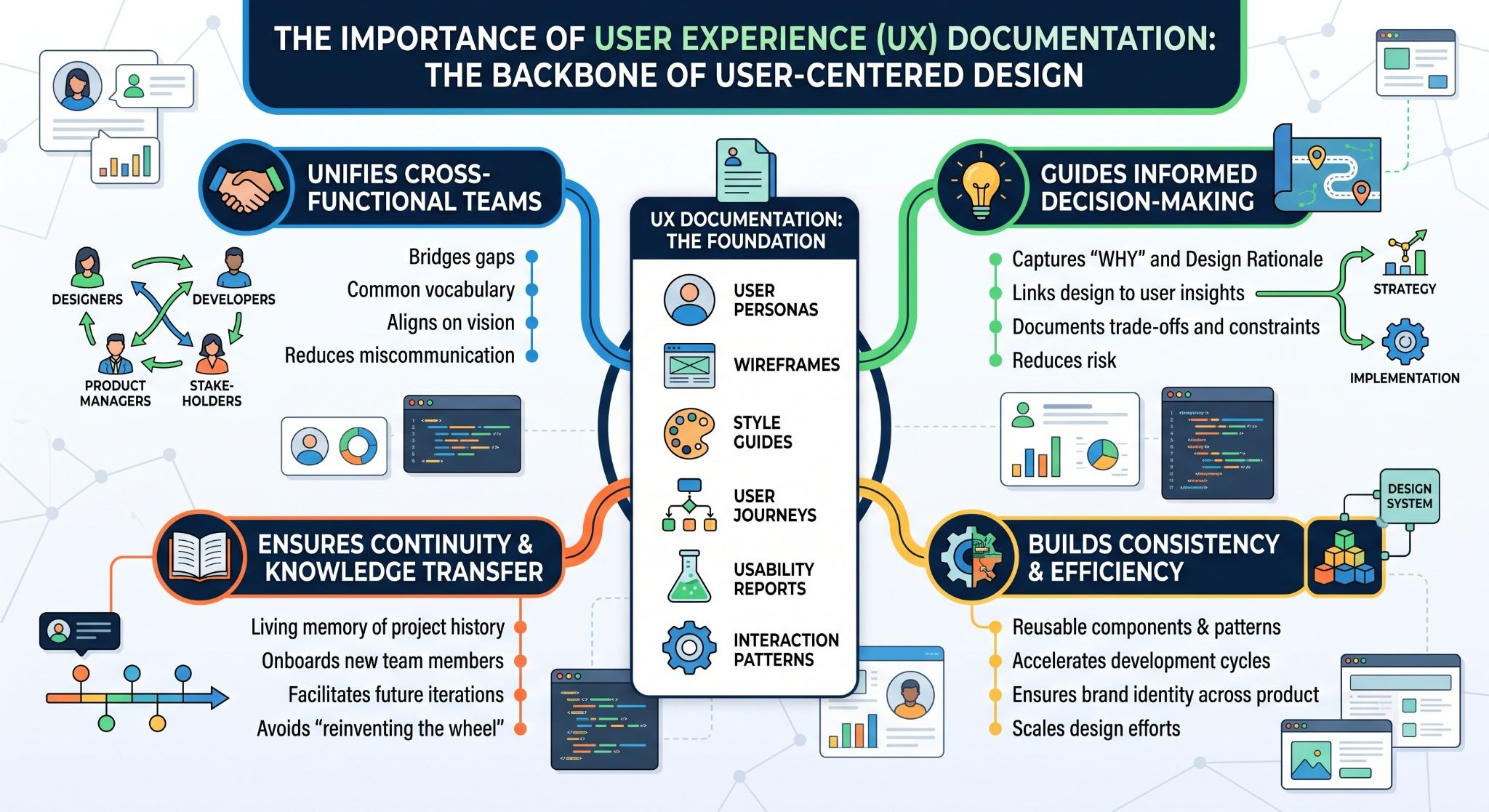
Style may be fake, but a proven process is not. The surest measure of whether a designer possesses a strategic approach is the designer's readiness to show how they work.
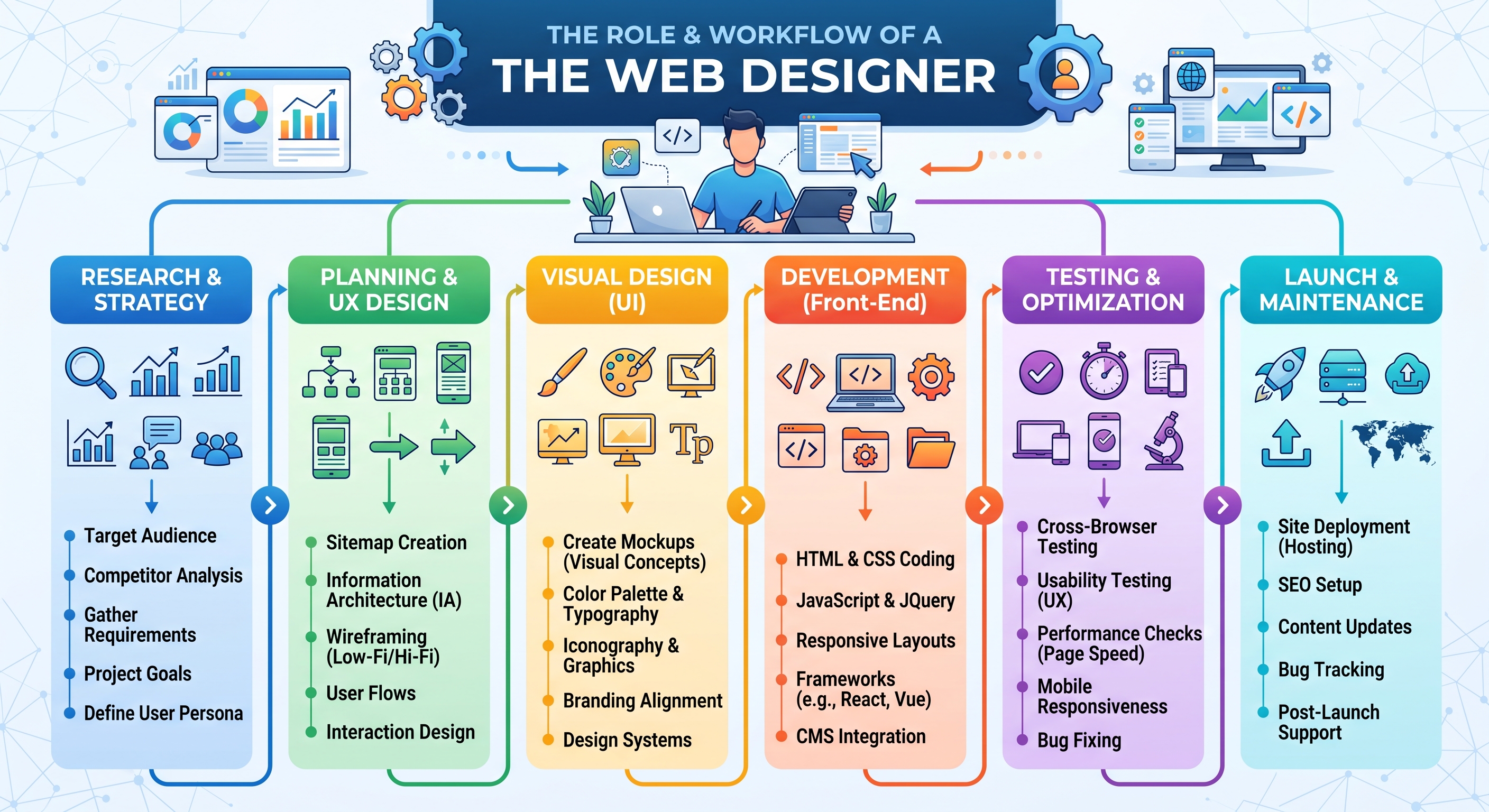
Require the designer to share the "messy" part of their process: the wireframe, the user persona, the sitemap. These pieces are the plan of action for your website. When a designer doesn't go through this stage but goes ahead to create the site in its final form, the designer is simply making an assumption about what your users need. Wireframes allow professional web designers to make sure that the site works and makes sense before applying design elements. Vetting for this kind of process ensures that you get more than good-looking surfaces – you get a well-functioning engine.
4: Technical and SEO Requirements — Ensuring Your Site is Found
Even if you have a highly converting design, your site will not be successful if it does not load quickly, properly display on mobile devices, or meet accessibility requirements. A "good looking" site that doesn’t work on smartphones and takes six seconds to load is the end of conversions. To get your money’s worth in the future, you need to vet both technical expertise and creativity.
Mobile-First Design and Responsive Frameworks
Mobile design is no longer an add-on; it is the core experience for the vast majority of the internet. If your designer is still concerned about “desktop first” and “shrinking down” for mobile, they are not with it anymore.
An effective web designer works with a mobile-first strategy. That means, they think about the user experience from the smallest screen possible, then move to the bigger screen designs. Make sure that your candidate is familiar with all the break-points, the particular screen sizes when a design will change. The person must be working on multiple devices (iOS, Android, tablets, and desktop) to make sure that your user journeys do not break at different screen sizes. If users have to “pinch and zoom” to understand the content, you have already lost them.
Page Speed, Core Web Vitals, and Performance
Speed is a very important conversion factor.Studies have shown that even one second’s delay in your web page load time can reduce your conversion rate.
When interviewing the candidates for the position of designer, you should ask them about their designing process and if they know about the importance of performance on websites.Are they aware of the problems that arise due to high resolution images and how to reduce any scripts that are unnecessary? A designer who always talks about “clean code” is an asset for your business; a designer who uses heavy-weight plug-in libraries for generating visual effects is a liability. You should discuss with them about Core Web Vitals which are basically the set of measurements by Google to determine the user experience.
Accessibility and WCAG Compliance
Accessible design (A11y) is both a legal requirement and an ethical consideration. Creating web content for people with various disabilities, such as visual and motor deficiencies, not only is the moral choice but also makes your website easier to use overall for everybody.
Making the content accessible through alt text, proper contrast ratios, keyboard navigability, and other methods is "SEO-friendly" by default because search engines utilize the very same indicators to understand what your website is about. With good web design of accessible content, you will be creating an understandable and searchable site for search engines to spider. Ensure that your web designer is familiar with WCAG (Web Content Accessibility Guidelines). An inaccessible site is losing money.
5: The Interview Questions to Separate Experts from Order-Takers
The interview will be your last gatekeeper. At this point, you already have selected the best candidates based on their portfolio. The final step is to look beyond the work and evaluate the mentality of your future partner. The order-taker will say "Yes, we can deliver it" while the expert will question you in order to make sure that the end result will actually help your business grow.
Testing Strategic Thinking
To check whether the web designer thinks in terms of a business owner, use your interview session to ask them a couple of questions that uncover their thinking process. The two key questions you need to include are:
-
"How do you deal with projects whose main task is generating leads?" The right answer is focused on user intention, funnels, CTAs and how they will minimize the friction in the user experience.
-
"What is your process when it comes to balancing between brand and conversion?" It is a stress test. The experienced designer knows how to balance brand aesthetics and conversion. If the designer suggests the solution which hinders conversion, they should give their rationale.
Gauging Communication and Project Management
A good design is not enough for success; you need to know how the designer operates during stressful times. What's their approach to feedback? Is there a strict plan of action in case of any changes or will it be the source of an infinite number of email exchanges between you two?
Also clarify how your web designer will be managing communication and your project. Find out which project management tool they use and how often you will be getting updates from them (i.e. whether you can expect daily or weekly communication). A real professional will regard your communication as part of the services they offer and provide you with regular updates about everything. If they can't describe their workflow clearly, you can rest assured they do not have one at all
6: Securing the Partnership — Contracts and Milestones
The last step in your vetting process is much more than mere verbal agreement; it is thorough documentation. The contract will ensure that the most frequent cause of project failure – lack of clarity in expectations – does not occur.
Preventing Scope Creep with an Itemized Statement of Work (SOW)
“Scope Creep” is the gradual increase of requirements in a project above those agreed upon in the initial agreement. In order to avoid scope creep, your Statement of Work (SOW) should be very detailed. Never take vague phrases like “website redesign” when you need a breakdown of the deliverables and the number of revisions per design phase.
Specify delivery milestones based on payment schedules to keep the project on track and ensure that both parties agree on the progress before proceeding to the next design phase
Intellectual Property and Post-Launch Support
Think about the long-term logistics of your new website before you start. Who will own the source files, the assets and the branding used on the website after it goes live? Make sure that you get this clearly outlined in your contract, i.e. that you become the owner of all intellectual property after full payment.
Also make sure that you have clearly outlined the post-launch support terms and conditions. What happens if the website suddenly stops working a month after launch? Is the web designer going to fix it for you or are you on your own? Make sure you get a formal hand-over to your team and proper training so that they can manage the website on their own afterwards.
Making the Final Choice for Long-Term Growth
This isn’t about selecting a web designer based on their favorite color combination or design template. It’s about finding someone who is capable of knowing your financial objectives and working according to that. By incorporating a “Conversion-First” approach in your selection process, you divert attention from vanity metrics towards real growth.
Keep in mind that when you hire a good web designer, you are not investing in a mere business expense but a very profitable one. With the careful scrutiny of candidates based on their strategic acumen, technical skills, and communication ability, you are investing in a digital asset designed to support sustainable business growth.