Integrating Machine Learning into Your Startup

Integrating Machine Learning into Your Startup
1. The ML Imperative for Modern Startups
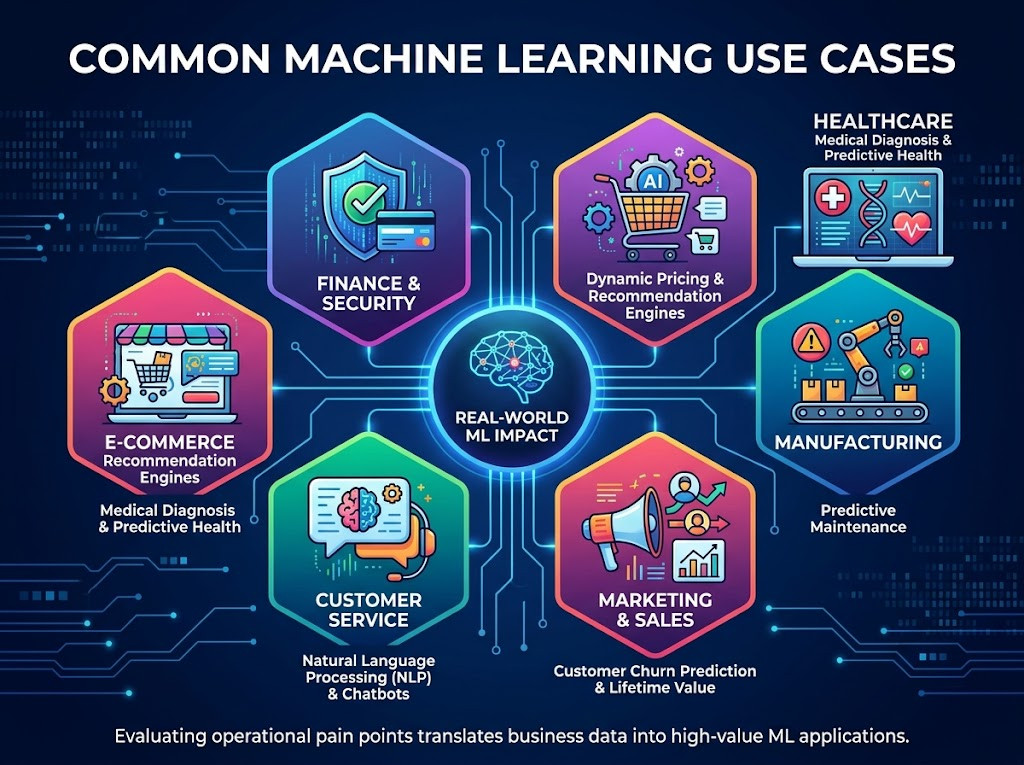
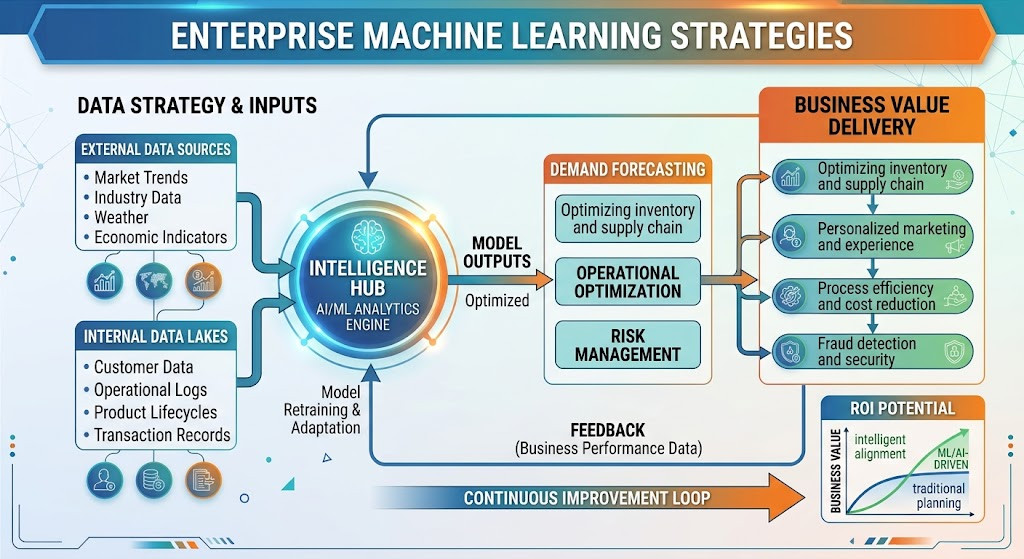
AI is no longer the “cool” innovation for startups. In today’s digital economy, it has become the necessary technology to scale a startup, using it to power predictive analytics, personalization, and automation within a company’s operations. Founders must implement machine learning (ML) in order to stay ahead in the market and remain competitive.
The main pitfall encountered in the implementation of Machine Learning is the talent gap, i.e. the difficulty of finding specific senior talents and implementing them into projects in order to develop and scale robust Machine Learning systems. In the marketplace full of boast fulfillment-oriented self-promoters claiming expertise in AI these days, it is also frequently not trivial for startups to correctly identify and hire Machine Learning specialized talents from generalists.
The difference between your experiment and your market-changing product is the quality of the talent and their rigorous vetting for AI implementation. Vetting talent is your North Star for getting the best AI talent for your startup. Without an approach to sourcing talent with disciplinary rigor, you will get stuck with terrible technical debt and fragmented delivery.
The remainder of this guide follows a specific roadmap as we delve deeper into the nuances of the current talent gap, and then onto utilizing specialized, curated platforms that connect founders with only the best, vetted talent to build out Machine Learning powered products. The outcome of this guide will give you a clear strategy to translate your idea into cold, hard reality, one that can be quantified in terms of the technical implementation and the resulting delivery of said product.
2. Understanding the Machine Learning Talent Gap
Why Specialized Expertise is a Rare Commodity
The term Machine Learning Engineer has become a sort of ‘catch-all’ for various specialized skills within the broader discipline of Machine Learning. When referring to the development of a Recommendation System within a startup, the skills and knowledge required are vastly differ from those required for developing an Autonomous Vision System, and indeed, from the development of a deep learning-based system, or for a Predictive Analytics system.
While generalists are fantastic to have around in the early days of a startup, they are not quite the right people to help you build a recommendation system. You want someone with in-depth knowledge of the architecture of sentiment analysis models, not someone who’s primarily a time-series forecasting specialist.
The problem with the term “Machine Learning Engineer” is that it’s become a sort of generic term for a huge variety of disciplines. But while there are many generalists out there with in-depth knowledge of Machine Learning, there are few that have in-depth knowledge of a specific discipline and have implemented it in production. And that’s what you need.
There is a huge gap between having academic knowledge of AI and being able to actually put that knowledge to work in practice. For example, an engineer with a PhD in AI can have deep and broad knowledge of the field, but be utterly lost when it comes to actually deploying a model in a high-velocity production environment. They can complain that the data is messy, that the constraints are too tight, and that they don’t have time to implement a solution. But in reality, deploying AI models at scale is a very different skill than just having deep knowledge of the field. It is a very different skill than being able to read a research paper and then go implement it. That skill exists, but it is far rarer than someone with deep knowledge of AI.
The Pitfalls of Traditional Hiring for Rapid Scaling
When founders try to bridge the skills gap of founders through traditional hiring, they run into a number of structural bottlenecks.
First, Time-to-Hire. While typical recruitment processes can take anywhere from three to six months for a hire to start, in fast-changing startup environments, the market opportunity can change before you find that full-time person to lead the effort for you.
Scalability: Many implementations require a large amount of work during the development phase, but afterwards require only periodic maintenance. Thus it would be inefficient for a startup to hire a large, permanent team of in-house Machine Learning talent. Instead, the skills of such talent should be brought in on an as-needed basis.
Fixed cost hiring of full-time staff, as opposed to engaging with freelancers and consultants on a project-by-project basis, leads to oversized staff during the lows of a project’s cycle and underutilized staff during the highs. The added costs of the often excessive overhead for bringing in full-time staff on top of the already excessive cost of hiring top-tier Machine Learning talent in the first place, causes severe financial strain for a seed or Series A startup.
Scalability: In the vast majority of Machine Learning implementations, a team of specialized individuals working on a single project will go through a series of highly intense development phases, followed by months of trivial maintenance work. A fixed-cost team of full-time specialized engineers is not efficient for such implementations – on the contrary, they are expensive to have on board for periods of relative idleness, whereas engaging their services on a project-by-project basis is a fundamentally more agile and cost-efficient model. For most organizations, having a fixed-cost department (the “Engineering Department” or the “Machine Learning Group” at a startup) leads to bloat – a model of inefficiency that startups can least afford given the structural financial constraints they are already under.
3. The Risks of Hiring Unvetted Talent
The High Cost of "Trial and Error"
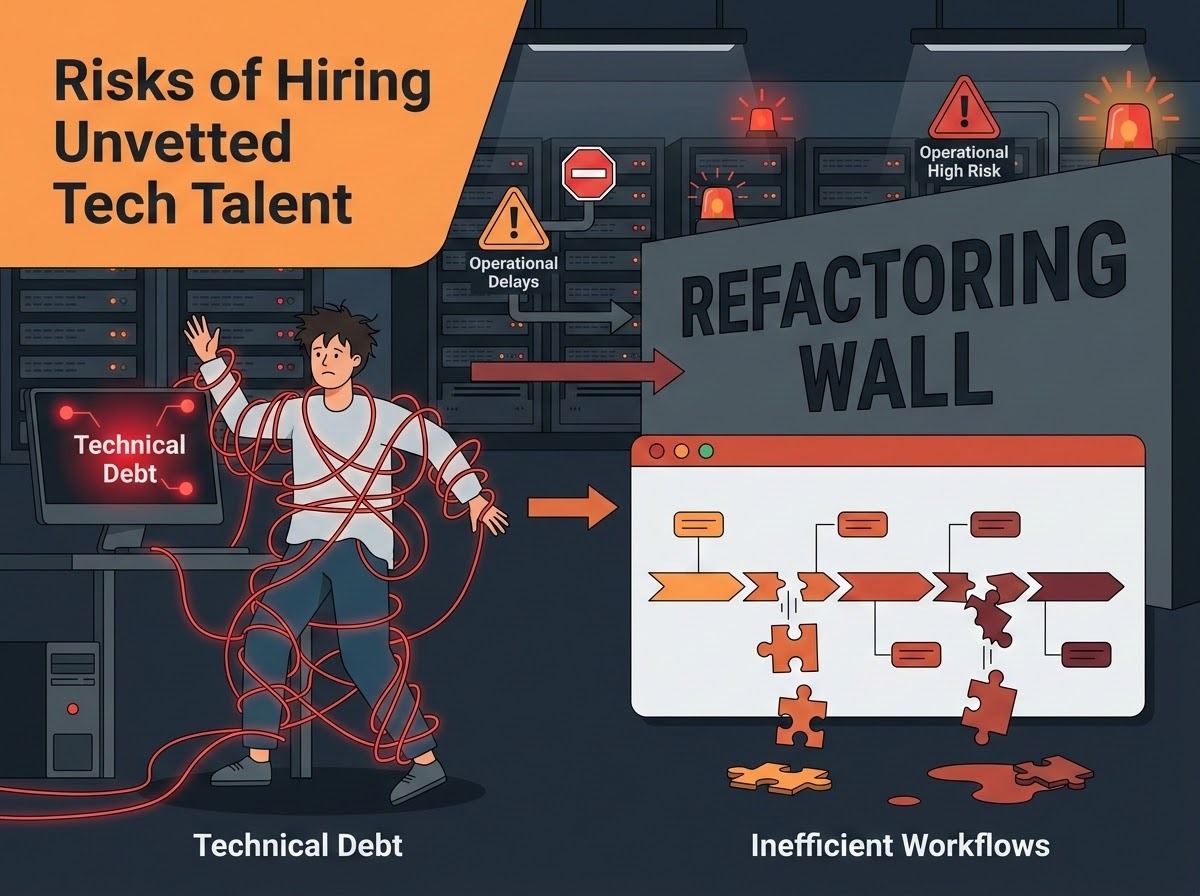
Hiring unvetted freelancers can be very costly. The worst kind of technical debt is the kind that you don’t even realize you’re getting into until it’s too late. “Black box code” are solutions that work for a little while, but then they become totally impossible to document, to maintain, to scale. And if your primary engineer can’t build out modular architecture, then you’re going to hit the refactoring wall. And that’s going to cost you double to fix the code that should have been built right the first time.
We risk the project not to be delivered as promised to failed experimentation on production data pipelines by a hired freelancer, who promised great things on high-level theory but failed on implementation. As a startup we can not afford to waste capital and time for a project which is not delivering what was promised in the interview process, when we could have identified the skill gap if we ran a proper hiring process in the first place.
Operational and Strategic Delays
In the startup world time is money and delaying a launch due to issues with sub-optimal code produced by an inexperienced hire allows competitors to launch and grasp market share whilst you’re stuck in neutral, losing valuable time and failing to reach your business goals.
In addition to these significant lost months, there is a huge unseen loss of resources as your key executives or senior engineers get pulled down into the mire of the low quality work of the unqualified new hire. They were previously innovating at the highest levels of strategy as it relates to product / market fit and business development, and are now project managers – babysitting through long hours of low quality, error prone code until it “sorts itself out” and they can move on to the next day of pain. This lost resource value far, far, far exceeds any up front cost to find the best person for the job in the first place.
Security and Data Integrity
Data is the heart of most Machine Learning projects. This is the core of your startup – customer behavior patterns, financial records, and confidential IP that gets processed by your model and stored in your data environment. Hiring people to work on your Machine Learning projects through open marketplaces, which function on low trust, is a recipe for disaster when it comes to data leakage. You would need to implement a strict layer of vetting, and on top of that, the security protocols on these platforms, in order to prevent mishandling, unauthorized access or even theft of your data. When working with Machine Learning, your startup’s hiring process should be based on trust.
4. How to Define Your Machine Learning Needs
Translating Vision into Technical Requirements
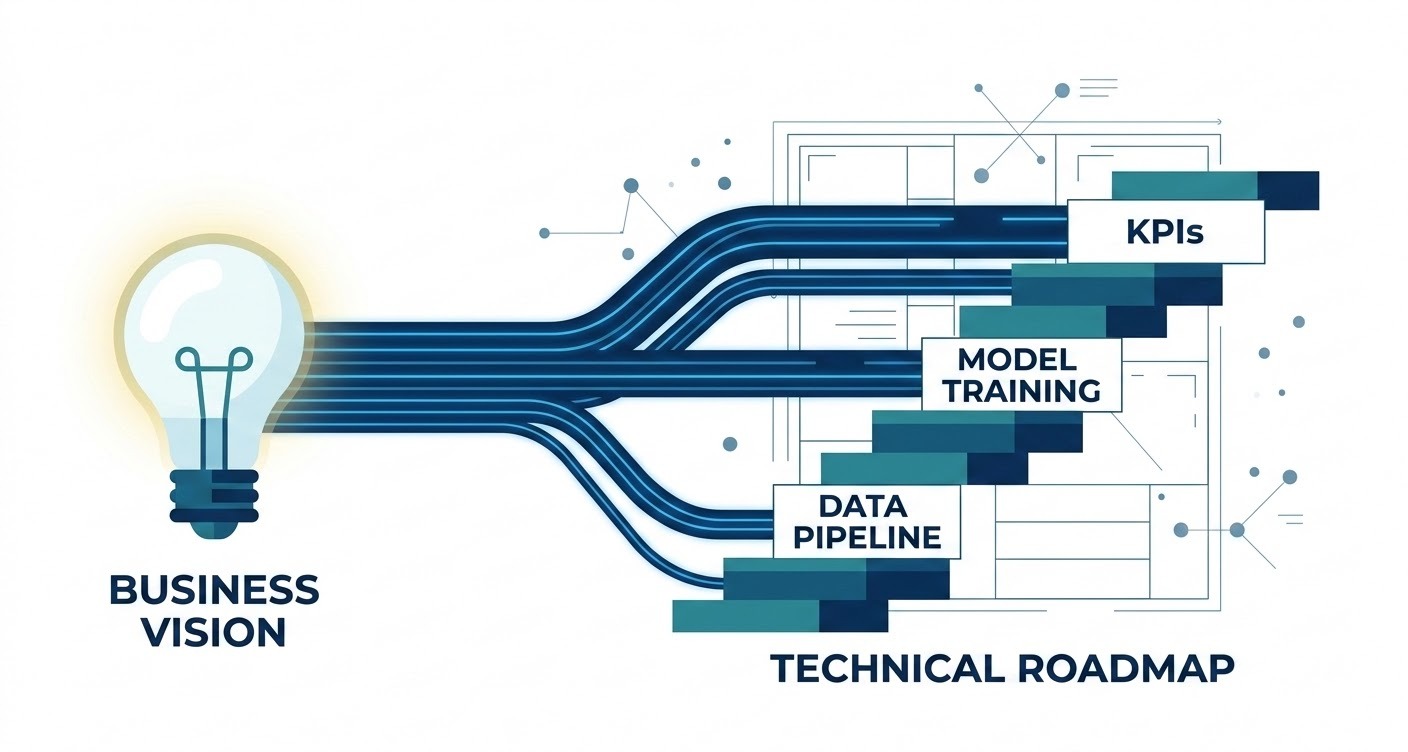
Startup Founders are Product Visionaries. They have a perfect view of the desired outcome and even quantify it such as reducing user churn by 20% or enabling real-time recommendations. However, breaking down the technically complex ML projects into the required development steps is usually their biggest challenge in the first months of working with developers. As a Founder, you are expected to be able to brief your tech experts on the outcome you want to achieve and on the steps required to achieve it.
The solution to the founder’s biggest Briefing Challenge is to break down the Machine Learning project into manageable steps or milestones. Rather than seeing the whole project as one behemoth of work that you don’t fully understand, treat it as a building (a build). Create a series of milestone targets (as mentioned above) that the founder can complete step by step, thereby creating an actionable ‘build plan’ for both founder and developer to complete individually, and collaborate on together. You can switch and adjust ‘parts’ of the build as necessary before becoming too locked into one particular methodology that fails to yield results.
Utilizing the GigMint AI Task Pipeline
Business Vision to Engineering Brief without Data Science - GigMint AI Task Pipeline.
Our platform will convert your business objectives into a technically sound, milestone-driven project brief. The Task Pipeline enables you to describe your raw business objectives and then structures your project requirements, lists the necessary KPIs and selects the corresponding tech stack for you. This is how GigMint AI Task Pipeline helps to bridge the gap between business and engineering in order to find the right experts for your projects. The structured project brief serves as your technical translator.
These 3 key steps then lead onto Precision Matching. With a clearly technical and milestone focused project brief uploaded onto the GigMint marketplace the AI algorithm auto-matches your project with the most qualified and best-fitting GigMint expert or team for the task at hand.
Precision Matching means you no longer need to sift through hundreds of largely irrelevant and often low-quality bids from sub-optimal candidates. In addition to simply being more efficient the matched expert or team will possess the required specific skills in areas such as NLP, computer vision or predictive modeling etc to best service your precise needs. As a result, what was a tedious, difficult and time-consuming task of trying to find the right Gig to hire can now be undertaken in a quick, easy and largely automated manner.
5. The Gold Standard: Finding and Vetting Experts
Core Competencies of Top-Tier Machine Learning Talent
Don't let the resume be the starting point and ending point for finding the best machine learning engineer. Just because someone has been good at Machine Learning in college or has read a lot about it doesn’t automatically make them a great Machine Learning Engineer. It usually takes a combination of hard skills and soft skills, that most people don’t pay enough attention to, to become a very good Machine Learning Engineer.
This engineer needs to be able to proactively communicate constantly with other engineers who are likely to be located in different parts of the country or even the world and work in an asynchronous, largely remote manner. Thus he or she must be able to anticipate all possible architectural issues and advise the rest of the team on possible problems before they actually become issues that would stop the rest of the team from completing the current sprint. The best candidates will have reliability, ownership, and be able to work very independently, like a high-level consultant rather than a mere freelancer.
Certifications and repositories on GitHub typically don’t translate well to evaluating a candidate's ability to solve complex problems in the real world. Assessing a candidate’s technical ability requires conducting a deep dive technical assessment to confirm they have practical experience deploying Machine Learning models in production as opposed to just completing coursework. We are looking for candidates that can prove their ability to sustain themselves solving increasingly difficult problems on an ongoing basis. The candidate must be able to optimize models for latency, maintain the quality of their code over long periods of time and be able to integrate with a variety of existing data stacks.
Why "Curated" Platforms Outperform General Marketplaces

Most general-purpose freelance marketplaces are plagued by hordes of unqualified bidders making non-serious offers. It’s a massive inefficiency which means that as a customer you have to function as a recruiter to find your builders. This is why there are curated platforms in the first place. They enforce The 1% Standard (i.e. only allow 1% of applicants to join) by implementing very rigorous screening processes which ensure that everything you only have to look at profiles of qualified applicants.
GigMint’s multi-stage screening process seeks to sift through and uncover the absolute best professionals available on the market to build projects with. Initially, GigMint completes initial skill assessments and conducts a series of background checks to ensure that applicants are not only qualified, but also to verify their integrity and ensure their professionalism as contractors. GigMint engineers then undergo a round of technical tests to not only identify their individual areas of technical expertise, but to also assess their individual problem-solving abilities in extreme situations, as well as their overall ability to effectively and professionally communicate with other stakeholders of a project, on top of its engineering team.
This comprehensive evaluation enables us to guarantee that every expert on GigMint can hit the ground running to deliver value for their clients as quickly as possible. This is possible due to our rigorous screening process which accepts fewer than 1 in 100 applicants who apply to join GigMint, providing clients with access to the world’s absolute best Machine Learning experts for their specific project requirements.
6. Managing Risk and Security in Machine Learning Projects
Infrastructure for Secure Collaboration
Integrating machine learning into your development workflow brings many strategic benefits. However, there are also unique risks to the security of your data and your budget that must be mitigated. Opening up your internal data environments to external consultants for your Machine Learning project is not just hiring, it is giving access to your core assets. So, managing these risks is as important as the code you are writing.
When selecting the right Machine Learning partner, the security of your company’s internal data environments and the related internal processes is non-negotiable. Therefore, when evaluating the best platforms for your Machine Learning initiative, make sure that a robust security infrastructure is in place, such as SOC 2 compliance. This will provide you with confidence that your most valuable assets – your proprietary models and your sensitive datasets – are being properly protected throughout the entire development lifecycle.
In addition to the security of the project’s code, there is another critical component that is often overlooked: human oversight. Even the best managed technical project can hit unexpected hiccups and rarely runs perfectly to plan. 24/7 dispute resolution human support is crucially important in these types of situations. The oversight layer acts as a “safety net” on the project allowing for crucial human intervention when communication breaks down or project scope and terms alter, with a neutral third party expert stepping in to facilitate getting the project back on track quickly to avoid a complete waste of development time.
Financial Protection via Secure Escrow
Protecting your startup’s capital is just as important as protecting your code. Therefore managing the risks involved in paying a freelancer for work is best done by setting up a secure escrow account. An escrow account holds the funds until the founder has approved a milestone. This way the incentives of the developer are aligned with the founder’s business goals. The founder controls his budget and the freelancer is only paid for work he has done to a high standard.
Add global payment capability to your hiring process. Platforms can use secure global payment systems like Stripe to manage payment across 90+ countries. Founders can pay employees in local currency, have tax withheld and comply with all local and cross border tax laws. The platform handles all taxation for founders, eliminating a huge burden. Founders can now focus on growing their company, while risk of financial and operational risk is significantly minimized.
7. Conclusion & CTA
Your Roadmap to Machine Learning Integration
Integrating machine learning into your startup does not have to be just another technology step in the growth of your startup. It can form the foundation for sustainable and intelligent growth. This guide to integrating machine learning into your startup highlights the Machine Learning talent gap which is a significant barrier to entry but not insurmountable.
Translating a startup’s good ideas into leading products on the market requires corresponding technical requirements to be described accurately and the matching expertise to be acquired to execute them. This can be achieved by shifting away from conventional generalist search approaches and instead focus on hiring milestone-driven, vetted talent.
At its core, a startup enjoys an advantage due to its nature of being agile. While a large corporation gets held up by layers of bureaucracy and an arduous internal hiring process, a startup can move lean and with great precision with the help of on-demand, elite expertise to achieve its development milestones.
What a startup is hiring when it comes to Machine Learning, is not a developer. What a startup is buying is speed. If done right, high-quality ML solutions can be deployed without the typical overhead of high-cost and permanent headcount, thus allowing the startup to compete with large, established players in a highly volatile and ever-changing market.
Call to Action: Start Your Journey with GigMint
Success with ML integration starts with a great partner. At GigMint, we believe that world-class ML is available, secure and delivered milestone by milestone. We take the uncertainty, risk and administration out of it all and let you get on with building your future.
Posting a project to GigMint is free. You only pay for a milestone after you are satisfied with the work that was completed. Ready to start hiring a team of vetted, high performing Machine Learning contract workers to help launch your startup and start scaling intelligence as quickly as possible? Visit GigMint.ai to get started today.