The Ultimate Guide to Machine Learning vs Generative AI: Which Technology Fits Your Business Need?
The Ultimate Guide to Machine Learning vs Generative AI: Which Technology Fits Your Business Need?
It is the strategy meeting and the acronyms are flying across the table. While one person talks about using AI to make your logistics operations better, the other executive says that you have to use a huge language model to transform your communication with your clients.
It looks like all the tech companies on the planet claim that the specific AI product that they offer will instantly multiply your sales.
Once the sales talks are over and done with, the only important question is left behind: what are you really buying and what does your business really need?
The corporate world is in the middle of a very big technological transformation process right now, yet it is overshadowed by great confusion. Business people tend to use machine learning vs generative AI as interchangeable terms.
But such a comparison would be the same as thinking that a financial auditor and an advertising copywriter can replace each other, even though both of them are equally useful to your business. You will simply waste time, burn your technology budget and stop growing.
Through knowing the unique differences of machine learning vs generative AI for business, one will be able to filter out all of the vendor noise, make technology investments that are in line with the unique pain points of one’s business, and turn these technologies into practical ways of creating a return on investment (ROI).
This ultimate guide is going to explain exactly how both technologies work, show what kinds of unique business problems each technology solves, and provide a roadmap for figuring out which technology is right for one’s business.
Decoding the Basics: What Are We Actually Talking About?
Prior to making any sort of intelligent choice for your organization, you should have a good grasp on how these two unique fields of artificial intelligence actually work in practical terms.
Machine learning vs generative AI can be found within the vast world of artificial intelligence. Both technologies use algorithms and data in order to operate. However, at this point, the similarities between the two stop. They serve completely different purposes for organizations.
The Analytical Power of Traditional Machine Learning (ML)
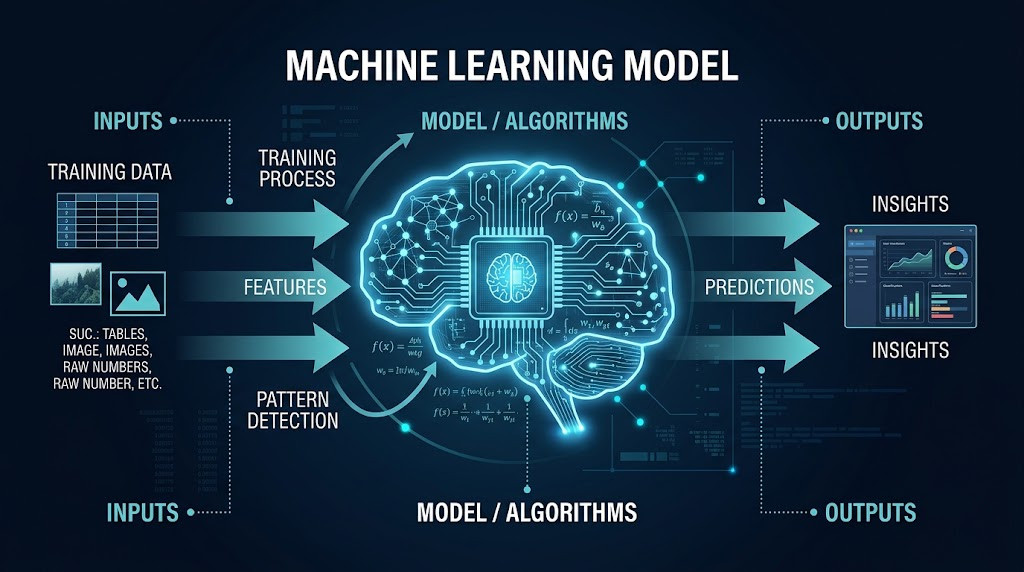
Machine learning is the practical, analytical foundation of today's enterprise AI. In essence, machine learning is the way in which a computer learns based on past experiences without having been programmed by a human to solve each individual situation.
For example, you are trying to find that financial auditor that we discussed previously. The kind of person who will analyze all that past transaction information and tell you where your cash flow will be going next quarter. This is pretty much the same thing machine learning will do for your digital ecosystem.
You pour tons of structured data into the machine learning system; such as past sales figures, click-throughs on your site, or the temperature readings from the sensors on your production floor. The system analyzes the data, finds the patterns that are impossible to see for a human being, and makes very precise predictions based on those patterns.
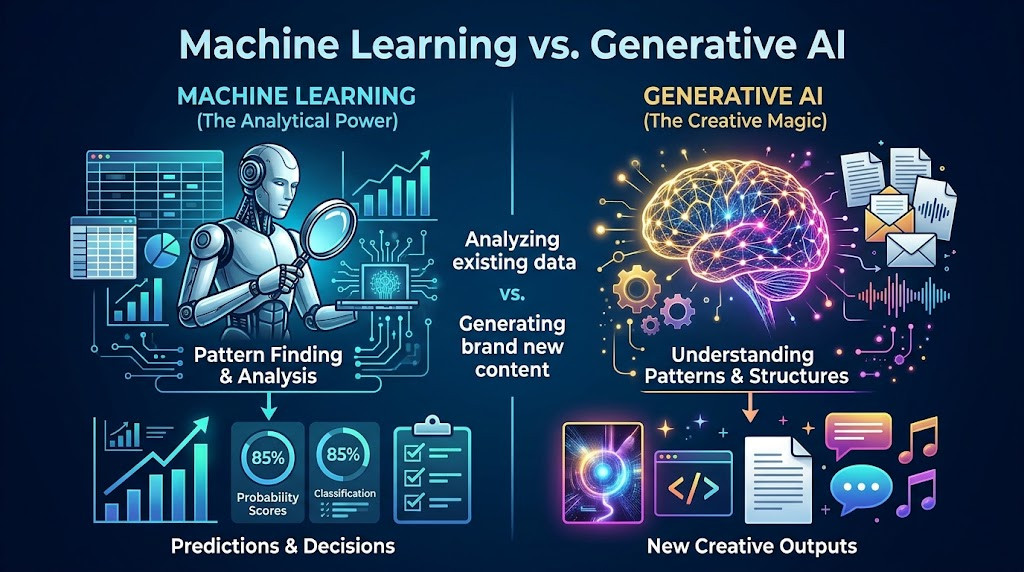
Machine learning doesn’t innovate anything. On the contrary, it analyzes everything that already exists to let you see it from another angle, sort it faster, or predict the outcome of your actions.
The Creative Magic Behind Generative AI
Generative AI, on the other hand, is the creativity machine of the artificial intelligence universe. Whereas traditional machine learning systems are hyper-focused on finding patterns to make numerical predictions, generative AI systems concentrate on the structures of data in order to create wholly unique, brand new content.
Whereas machine learning systems are akin to the auditor reviewing the numbers, the generative AI system is like the marketing director creating a new launch campaign from scratch.
Incredible amounts of unstructured data have been ingested by the generative AI, which includes but is not limited to LLMs and diffusion models. The second that you feed a generative AI model any kind of text input, the model uses all its training and predicts the rest of the puzzle for you.
The Core Differences: Machine Learning vs Generative AI for Business
Now that you have a solid understanding of the basic concepts, let us go ahead and delve into their functional differences. This understanding is perhaps the one thing that will help you more than anything else to select a proper technology.
Analysis vs. Content Creation
The easiest way to distinguish between the two technologies is by considering their final product. What do they provide you with?
Machine Learning is responsible for analysis, classification, and prediction. It takes into account a set of variables and gives out a number, a particular category, or a probability score. For instance, in an e-commerce setting, a machine learning algorithm will consider such features of the user as his browsing history, dwell time on-site, previous purchases and give out an estimate that there is an eighty-five percent chance that he will click on the advertisement for running shoes.
Machine learning is an analytical technology which aims to improve the process and take away the guesswork from it.
Generative AI is responsible for creation, ideation, and design. It receives a conversational prompt and outputs a complete digital asset. In contrast to Machine Learning, it won’t estimate the likelihood of clicking on an advertisement but will actually write the copy for the ad, create its graphic component and generate the HTML code for its landing page. Generative AI is an ideation and creation technology which scales the human output of your team.
Structured vs. Unstructured Data Ingestion
Another major distinction between these two technologies is in the way they process the data provided to them.
Machine learning needs highly structured data to work well. It likes well-organized spreadsheet files, nicely labeled databases and other numeric data to function effectively.
If your company’s data is unorganized, not all there or just messy, then machine learning models won’t be able to provide you with the correct insights. Data hygiene must be very high for machine learning to work well.
Generative artificial intelligence is highly flexible with regard to unstructured data. It is capable of taking a messy, one-hundred page PDF document, a confusing email chain from three weeks ago, an unprocessed transcription of an audio file and processing all this data in order to produce well-structured, well-presented information.
The output of generative artificial intelligence technology is inherently people-oriented. While machine learning produces complex dashboards, charts and other raw data, which requires interpretation by a professional data analyst, generative artificial intelligence communicates in natural language.
When Your Business Should Invest in Machine Learning
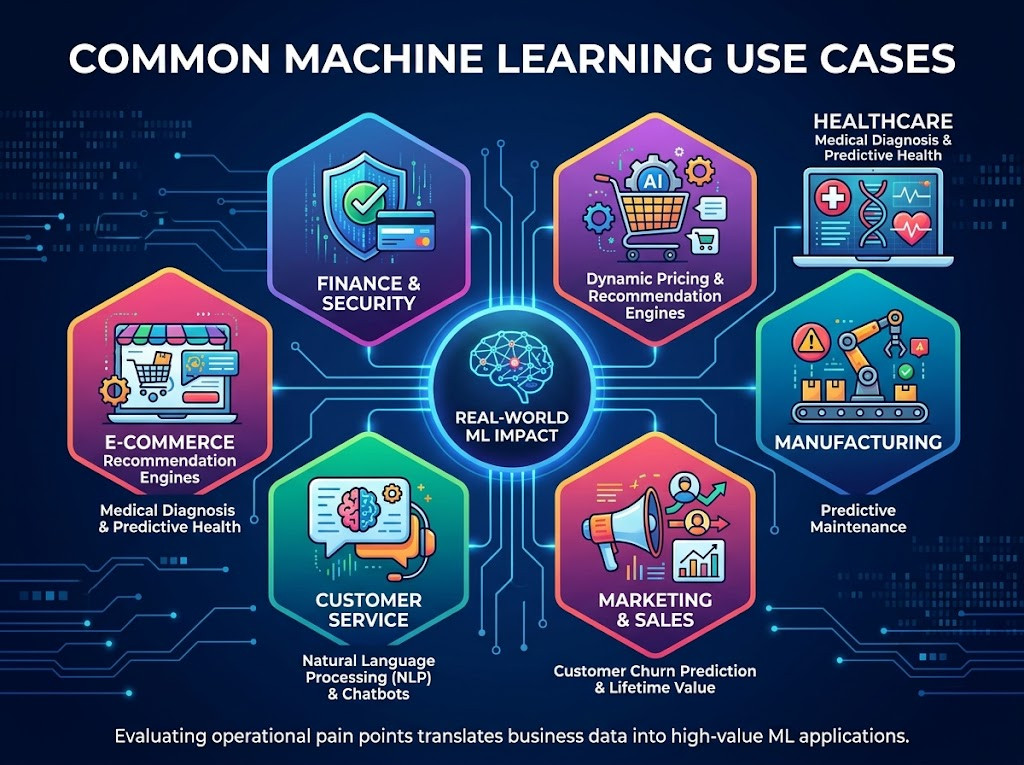
The budget needs to be utilized in classical machine learning in case the main business objective is optimization, risk reduction, or interpretation of large volumes of numeric data. In case you want to optimize your processes and make them much more efficient, machine learning will be the best choice for you.
Predicting Customer Churn and Behavior
Are you aware of exactly who among your best-paying customers is planning to cancel their subscription in the coming month? Well, machine learning is.
Through careful analysis of small behavioral changes in users like reduced login rates, ignoring your marketing emails, shortening of the time spent on each session, or increase in customer support complaints, machine learning algorithms are able to predict high risk cases well before these people actually cancel. In this way, you get a list of targeted customers to give some special retention offers.
Optimizing Supply Chain and Predictive Maintenance
If you operate a logistics business, manufacturing unit, or any kind of business where you need physical machinery, machine learning should become a mandatory component.
Using real-time sensor information from your machinery as inputs into a machine learning algorithm, you will be able to accurately forecast at what point a particular machine may fail weeks in advance.
This amazing prediction ability will help you plan for scheduled maintenance during non-working hours without having to face any kind of unexpected failure, which could disrupt your production and cost you millions.
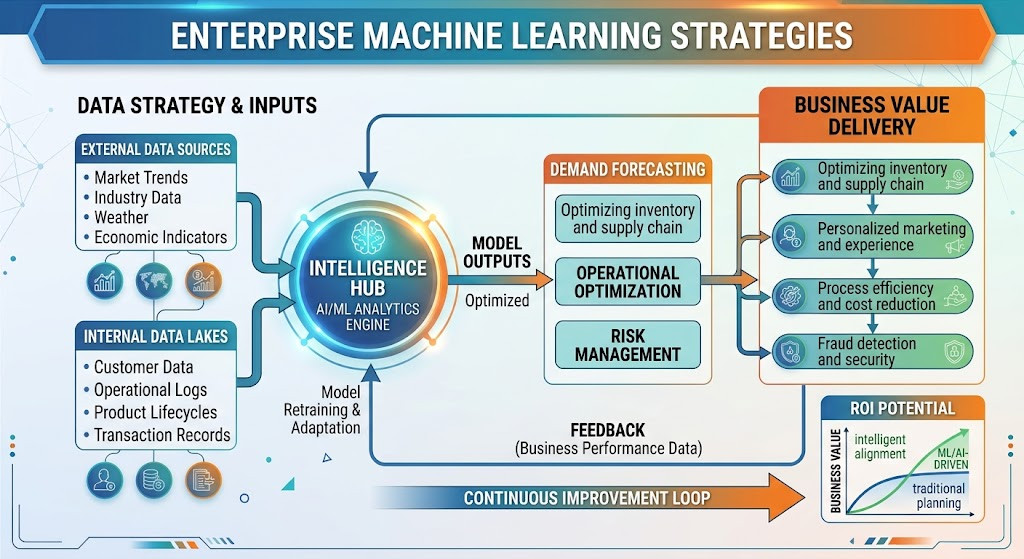
Machine learning will also help you in managing your complex logistics in terms of predicting shipping delays due to weather patterns, determining your inventory needs based on seasonality, and taking the most optimal fuel-efficient routes.
Enhancing Fraud Detection and Cybersecurity
In highly regulated industries such as financial institutions, insurance and e-commerce, machine learning is like the ultimate and unbreakable security guard. Since it is very good at spotting patterns, it can spot when these patterns get broken in no time.
If one day you realize that a client's credit card was suddenly used to purchase huge amounts of electronics in some foreign country at 3 o'clock in the morning, then machine learning will instantly spot the fraud and stop the process within milliseconds.
There is no way for any human being to go through millions of transactions per second in order to find out the frauds, but machine learning can do that with ease.
When Generative AI is the Perfect Fit for Your Business
It is time for you to shift your approach to generative AI if the main constraint in your business lies in the area of content creation, customer communication, or idea generation. Generative AI is what you will need if you want to increase the productivity of your team members without hiring many more people.
Scaling Content Creation and Marketing Efforts
Excellent content is what drives today's digital marketing world, and it takes a lot of effort to create good content. With generative AI, it completely transforms the whole process of content creation and dissemination.
With the help of generative AI platforms, your marketing department can write dozens of different blog posts, highly customized email copy for hundreds of customer segments, and a whole month of social media copy within a few seconds.
Although the initial result always needs some work by a human editor to make sure that the voice of the brand is preserved and the information is accurate, generative AI does one thing that cannot be done otherwise – it solves the problem of the dreaded blank page.
Revolutionizing Customer Support with Intelligent Chatbots
We have all faced the annoyance of being forced into endless loops to get through to a human agent when confronted with those annoyingly mechanical chatbots for customer support. The age of such frustration is quickly coming to an end with generative AI.
Unlike old-school chatbots based on generative AI, which would simply respond based on pre-programmed templates, these modern AI solutions can understand the subtleties, tones, and unique situations behind a particular customer complaint.
These systems can instantaneously ingest the entire history of your company’s knowledge base, return policies, and product manuals, and give a unique response in real time.
It will make a huge difference in terms of speed in resolving tickets, increasing customer satisfaction, and also enabling your expensive human resources to deal only with the emotional escalations.
Accelerating Product Design and Software Development
The Generative AI is not used solely to create marketing copy; the AI creates functional content. Innovative organizations are extensively utilizing Generative AI models to significantly reduce time needed for research and development of new products.
Your programmers will be able to employ the help of Generative AI assistants to easily create the boilerplate code, immediately identify and debug complex code errors, and translate the whole code from one programming language into another.The designer would simply input some physical characteristics and request that the Generative AI create a few design options for him.
Blending the Two: Can You Build a Unified AI Strategy?
You might be reading this and questioning yourself whether or not you have to pick one route or another. The good news is that the best companies in the world are indeed utilizing both of these techniques and often combining them to form an all-powerful AI strategy.
By uniting the analytical skills of machine learning with scalable and creative capabilities of generative AI, you are creating the real magic of automation.
Let’s say you are an e-commerce company selling clothes and you’re growing quickly. You can build an ordinary machine learning algorithm that will perform analysis of a customer’s purchasing history, browsing history and demographics to identify exactly which three products they are the most likely to purchase.
But that’s not enough, as the mere knowledge of what a person wants does not imply any action on your part.
This is precisely where you pass the baton to generative AI. You utilize the highly precise product recommendations generated from the machine learning model and feed those inputs straight to a generative AI system. You tell the AI to craft an extremely personalized and engaging email based on the interaction of the specific customer, while including the product recommendations.
Machine learning determines the approach and the generative AI does the talking. Combined, they form a sales engine which is completely automated and extremely personalized for the end user.
Step-by-Step Guide to Choosing the Right AI for Your Needs
Having grasped the overall picture, you now need to decide which way to go in the case of your own organization. Selecting the right technology involves a harsh and honest assessment of your existing process. Here is what you should do to spend your money and efforts on the right things.
Step 1: Identify Your Biggest Operational Bottleneck
Don’t invest in AI software just to boast that you’ve got AI. Figure out which one major bottleneck plagues your company right now.
Are your profit margins continuously falling owing to inefficiencies in logistics, excessive costs of physical material, or breakdowns of expensive equipment? Are you failing to retain clients because you’re unable to determine those who may be in danger of going elsewhere? If inefficient operations or lack of foresight are your arch enemies, regular machine learning is your tool.
On the other hand, is your sales performance deteriorating due to your marketing team’s inability to generate enough content to conduct A/B testing? Is your support department struggling with the flood of trivial tasks of resetting passwords for your clients? If so, then generative AI is the solution you need.
Step 2: Audit Your Internal Data Infrastructure
Regardless of which kind of artificial intelligence it is, it will be only as effective as the quality of the underlying data. It goes without saying that one needs to analyze the condition of one’s internal data before making any investments in any new software.
In case one wants to apply machine learning in order to predict customer churn, he/she should ask themselves if they have any clean and structured data showing customer behavior during the past three years.
In case one’s data is spread out in five different software silos and contains numerous duplicates and human mistakes, the machine learning algorithm will deliver only fast but inaccurate suggestions. One will need to perform data cleaning first.
In the case of generative AI, messy and unstructured data will be less of an issue. Still, if one wants the AI to produce highly accurate and technical content related to their proprietary products, they will need to have correct sources for this.
Step 3: Evaluate Your Budget and Resource Constraints
Building custom machine learning models tends to be extremely costly upfront. This process can entail employing specialists, such as data scientists, taking months to clean up and organize the historical data, as well as adjusting the math in the algorithms to keep their accuracy high. All of this is a long-term strategy that will save you a tremendous amount of money in the future.
When it comes to generative AI and, more specifically, using off-the-shelf platforms with API integration, it is significantly easier to get started. In fact, you can give all your marketing or sales team access to generative AI for quite an affordable price per month. But keep in mind that this price will skyrocket if you start developing your own language model.
Common AI Implementation Pitfalls You Must Avoid
Even when you select the appropriate technology perfectly for yourself, there are many difficulties that arise during the implementation stage. Be aware of these pitfalls that organizations usually face while implementing technology.
Falling for the Vendor Hype Over Actual Utility
The loudest people in the room are usually the software providers trying to sell the latest and most glamorous tools. The current buzzword in technology at the moment is definitely the generative AI, which is taking over all the technology headlines and LinkedIn posts.
But you have to keep in mind that you should not get carried away by all the hype, because it will do nothing to solve your real operational problems. A flashy conversational generative chatbot will not improve the inefficient manufacturing process in any way.
Ignoring Data Privacy and Security Risks
The moment you start entering your valuable company data into the AI model, you should know precisely what will happen to that data and who owns it. Public generative AI platforms have no issue at all in stating that the data that you provide helps them train their global models.
The moment your employees start pasting your proprietary software code, your quarterly financial data, or your customer contacts into the open prompt, your company is facing significant risks of compromise. You must make sure that you implement strict policies in this regard without any delay. You should always stick to enterprise AI models.
Taking Your Next Steps in the AI Journey
Steering through the intricacies of the world of AI is definitely possible. You just need to remove all the layers of technical terminology and see what kind of outputs can be achieved.
Classic machine learning is your powerhouse solution for finding new data patterns, optimizing complicated processes to the fullest, and predicting the future like a crystal ball would do. Generative AI is a solution that will help you to accelerate your content creation, personalizing customer experience and ideation of your team.
Simply put, the right technology that would work perfectly in your organization is just one that solves the most costly problem of your business at the moment. Just take an objective look at what problems you have now, estimate how clean your data is and proceed from small steps. Start your own project using one measurable case and then scale up.
The AI revolution happened already. Your competitors are ready for it. Are you?