Why Every Tech Company Needs a Specialized Freelance Technical Writer
Why Every Tech Company Needs a Specialized Freelance Technical Writer
Why your business needs a specialized freelance technical writer
As software development races ahead in its rapid pace of growth, a quiet friction emerges: The “Complexity Gap.” This gap is the growing difference between the advanced output provided by today’s engineering firms and the true understanding level of the end-user. With increasing modularity and complexity of the API, the documentation becomes increasingly hard to keep up with the architecture. If the user cannot bridge this gap, even the most groundbreaking code will fall flat on its face.
We come now to the issue of "The Documentation Paradox." While tech firms spend vast amounts on hiring their top developers and creating solid back-end systems, they often overlook the very "instruction manual" that makes that product accessible. One widespread misunderstanding is that excellent coding is self-documenting; however, without an effective story line guiding the customer, the power of any feature goes unused or is simply misunderstood.
With respect to SEO and growth, documentation must be seen from the point of view of how it impacts user retention. It is not mere “help text” but an essential tool to drive product adoption and loyalty. The moment a developer is able to get an answer to his/her query within a couple of seconds from an indexed API manual, the TTV goes down and loyalty increases for him/her. Good documentation cuts down churn rate because it saves users from getting frustrated.
When competing in a marketplace, the answer is not just more writing, but better writing. The technical writing specialist can bring to the table both the domain knowledge and the flexibility necessary for translating technical systems into value. As an intermediary between engineers and the end user, these professionals make sure that your technical writing becomes a competitive advantage, not a disadvantage.
The High Cost of "Good Enough" Documentation
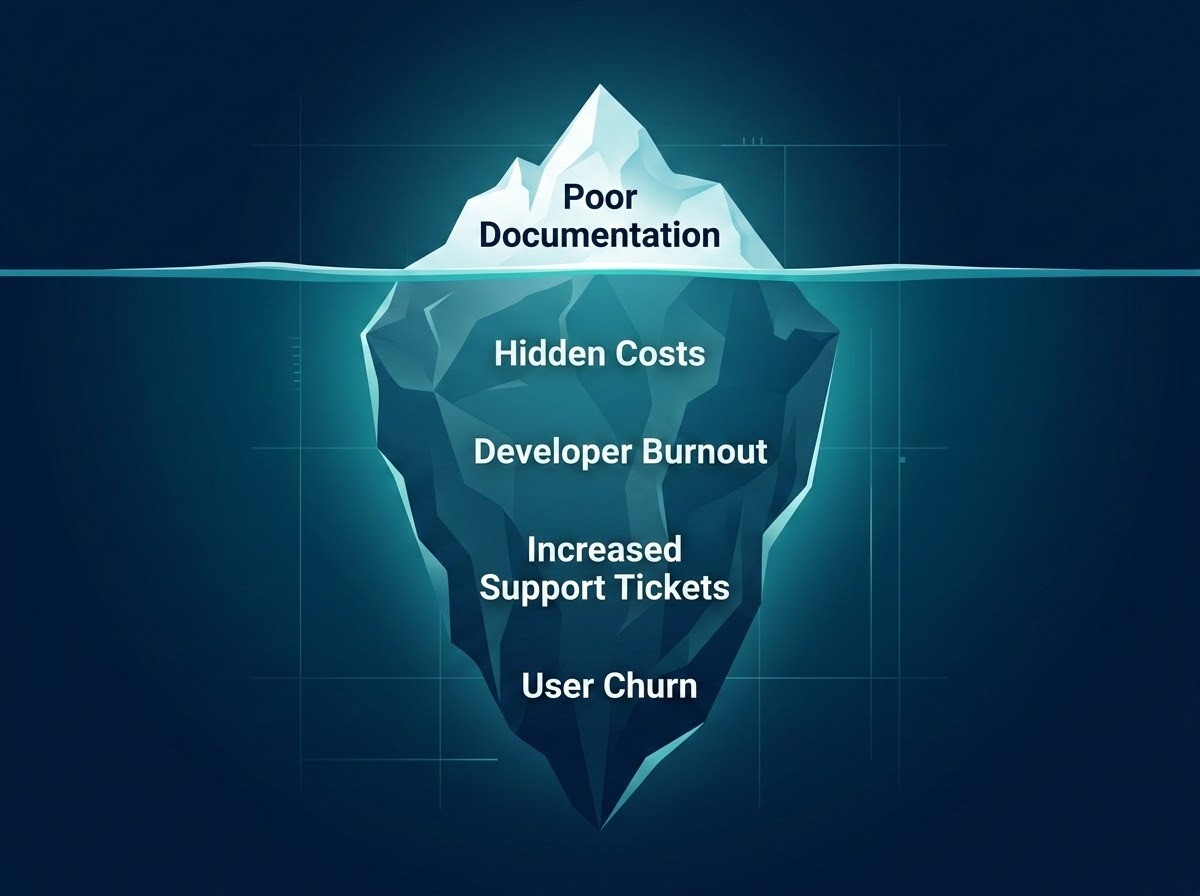
If your freelance technical writing is just "good enough," you're unintentionally accruing technical debt that quietly saps the profits from your business. As numerous management teams view technical writing as a secondary issue, something that is nice to have once the actual job of writing code is done, there is a snowball effect happening. Technical writing that is sloppy, unclear, or out-of-date is not just an annoyance for the consumer, but it is a basic failure in product delivery.
The Secret Price of Support
Bad documentation forces the team to act like an instant instruction manual. If the programmer is unsatisfied with the response he/she receives from your documentation, there will be no other way but to lodge a ticket.. This leads to an influx of tickets that could have been immediately solved using a simple API reference guide. The real “hidden cost” here is the lost opportunity cost; every minute that your top-tier developers spend in responding to these repetitive how-tos is another minute taken away from developing new features for the product.
User Churn and Abandonment
Given the competition present in the SaaS space, the usability of your product has a lot to do with how good your onboarding materials are. Poor API documentation means that your Time to Value (TTV), which is the important period in which the customer decides whether or not your product was worth the purchase, is unnecessarily high. The developer won't be able to create a simple “Hello World” or integration during their initial hour of testing and won’t attribute that to any personal inability but switch to a competitor that requires less effort to use.
Friction in the Sales Cycle
Technical evaluators like CTOs, VPs of Engineering, and Lead Architects established their evaluation criteria by first auditing your documentation before asking for a demonstration. They consider your documentation as an indication of the quality of the code and also of your engineering culture.
Poor documentation with broken links, TODO entries, and inconsistent vocabulary serves as a huge red flag. Professional and thorough documentation acts as a silent salesman that creates instant technical credibility and cuts down your sales cycle before you even get questions about security and implementation.
The Developer Burnout Factor
It is not necessarily always feasible to force engineers to write down all of their activities in the long run. Programmers tend to become victims of the “curse of knowledge,” thus making their writing efforts fit into the category of “expert-to-expert,” which means skipping all of the fundamental steps and presupposing readers’ familiarity with the inner logic of the project.
What is important to understand is that for most programmers, technical writing is an administrative task that hinders their passion for doing what they truly like – developing something new. Hiring a freelance technical writer will help resolve that problem by playing the part of an intermediary.
Anatomy of a Specialized Technical Writer
One of the first distinguishing features to consider when evaluating a potential candidate for the position of a technical writer is whether they distinguish between marketing-oriented writing and actual technical documentation. Although marketing materials strive to convince, seduce and sell the grandiose concept of something, the latter should serve as an intrinsic component of the product itself.
Technical writing is not just about describing something in detail; its core features are accuracy, usability, and repeatability. A good technical writer will always realize that the purpose of his or her job is to produce not a sales pitch but a useful tool that is necessary for end users to achieve success.
A good technical writer does not indulge in corporate fluffy wording and emphasizes logical, clear language instead. In other words, by treating documentation as a product, they make sure that all tutorials, API documentation and troubleshooting guides decrease user frustration and ease the job of engineers.
Requirements to Technical Literacy
The main value of a specialized technical writer is their knowledge of the language of engineers. The technical literacy of such writers is much higher compared to that of typical editors. They can generate deep-level documents, including API reference, SDK documentation, complex system architectures, etc. Most importantly, they are capable of coding.
They not only see the product but also look into the code bases and realize the logic of the code, thus being able to check all snippets of the code they document. In such a way, they can check the instructions against real builds and avoid code rot..
The "First User"
The biggest trap for a developer is assuming that the user knows what they know. Technical writers who are specialists serve as a "first user" with an objective point of view on identifying those friction spots that are too familiar for the developer. They act almost like a layer of empathy that helps in making sense of complicated system interactions in a step-by-step process. Being aware of where a problem can occur in advance—from something like forgetting to raise a certain flag to a strange authentication procedure—they can foresee and solve any problems that might come up.
Tooling Ecosystem
Technical writing is far beyond the borders of a separate word processor. Writing modern documentation requires understanding of the "Docs as Code" concept. The specialist of technical writing is experienced in working in the ecosystem of the developer using such tools as Markdown, Git for version control, and static site generators. That way, documentation is treated with the same approach as the code and becomes part of a "single source of truth" that evolves with the product life cycle.
The Strategic Advantage of freelance technical writers
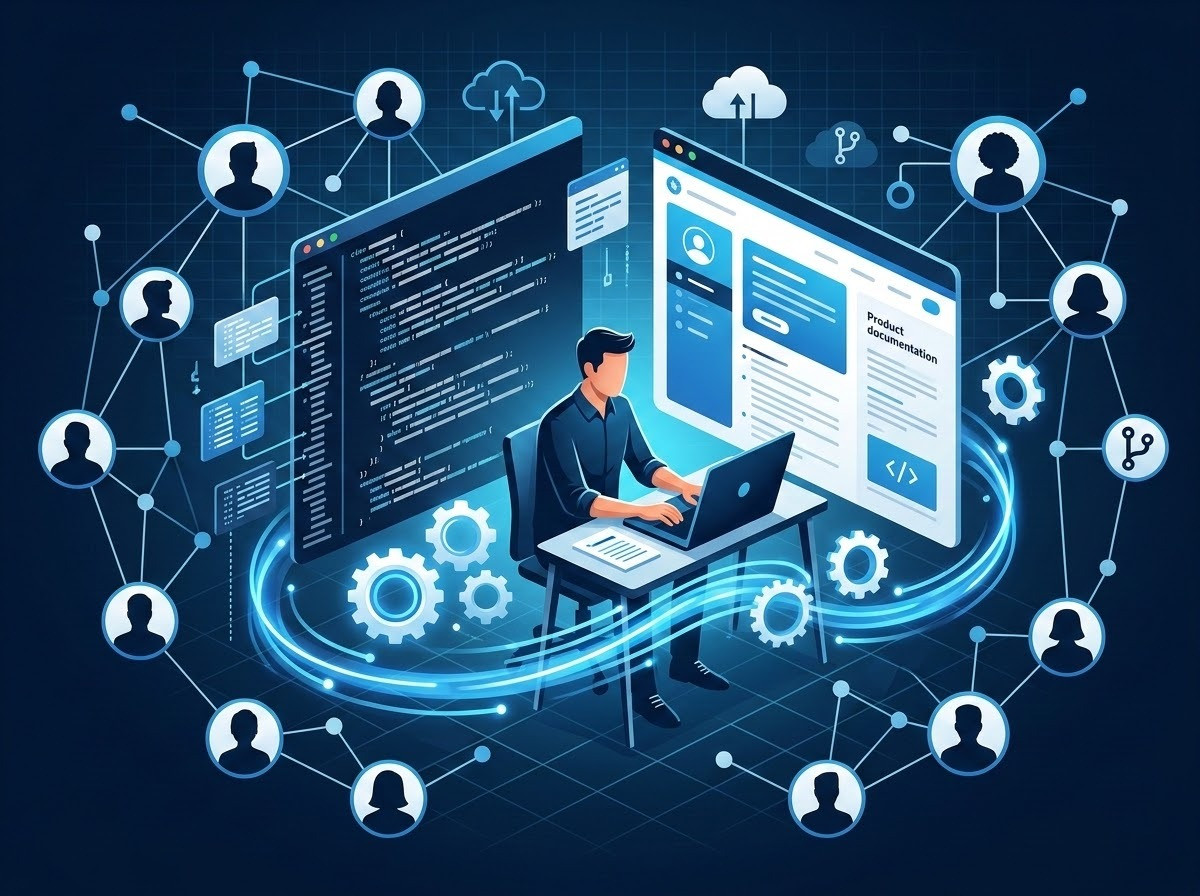
It is the currency of today’s technological business world. While the traditional method of staffing involves the complex and tedious method of full-time recruitment, which may take months of search and preparation, the new method adopted by forward-looking firms is that of using freelance technical writers.
They are no longer seen merely as “temporary help,” but have evolved to become invaluable assets. It combines the rare combination of high-level knowledge in a specific field along with the right flexibility needed to cope with the fast and unpredictable development process.
When there comes a point when a certain milestone in a project is reached, it becomes impractical to wait for a permanent member of staff to be fully prepared to start working. With freelance technical writers, companies can bypass the rigidity of normal staffing considerations and have access to experts in their specific field.
It is not only a case of having someone sit in that chair but rather a matter of architectural optimization. By using the services of freelancers, companies are able to disconnect their documentation requirements from the bureaucratic process involved in human resources.
Consequently, they can easily scale up during big product launches and scale down during maintenance periods. The "on-demand" approach gives product managers freedom to move forward at a very fast pace while staying out of the bureaucratic hassle involved with having a large and unnecessary documentation team.
Navigating Volatile Cycles
Product cycles in technology can be highly unpredictable. A firm may go along well with maintenance work for quite some time before it suddenly finds itself having to document a large-scale version 2 rollout, or SDK or API refresh.. Attempting to manage these peaks with full-time headcount creates a "feast or famine" staffing crisis.
Hiring a permanent employee during a peak leads to high overhead during the troughs, while the "onboarding lag" of a new hire often means by the time they are up to speed, the launch window has already passed. Specialized freelancers offer immediate scalability, allowing firms to ramp up documentation production instantly and scale back once the milestone is reached, without the long-term liabilities of permanent staff.
Niche Specialization at Speed
Software environments of today are extremely fractured and demand specialized vertical expertise. You may need a technical writer who knows all about the intricacies of Rust with regard to memory safety for your blockchain-based protocol, or someone fluent in Go for a microservices architecture in a cloud-native setting.
Finding a full-time employee who combines exceptional writing skills with such a specialized and very narrow profile may be a six-months-long search and more. Using freelance marketplaces, companies can easily find and integrate a niche expert who is an expert in your particular technical environment. The result of such an arrangement is a very high-fidelity document production right away without months of technical training.
Optimizing R&D Capital
Retaining a full-time team of senior technical writers is a massive fixed-salary obligation that includes benefits, equity, and administrative taxes. By shifting to a project-based freelance technical model, companies transform these rigid fixed costs into optimized, flexible investments.
Budgeting becomes granular and tied directly to output. This capital efficiency allows leadership to redirect critical funds toward core R&D and product innovation, ensuring that every dollar spent on documentation is producing a tangible, high-quality asset rather than simply maintaining a department's presence.
Curing Context Blindness
One of the most perilous forms of "invisible risks" while developing software is context blindness. Teams working on the project from within tend to get too involved, and they end up unintentionally overlooking certain steps or friction points since they just "know" everything about the system already.
The result is incomplete documentation that assumes certain prerequisite knowledge or uses confusing error messages that may discourage users from further exploring. Freelance technical experts, who work from outside, serve as "professional first users." Having no preconceived notions and following best practices across the industry, they help identify all the issues with usability or logic that you could be missing
Leveraging GigMint’s AI Task Pipeline
In the race to acquire the best of technical talents, the conventional process of recruitment is not always successful. Tech organizations often get stuck in the vicious circle of interviews and trial work that consumes their energy but offers no guarantees.
GigMint breaks this circle with its access to the best 1% of thoroughly screened freelance technical writers. Unlike other general platforms, GigMint selects exclusively those elite professionals who have an extremely valuable skill of combining engineering literacy with professional writing skills.
At its heart lies the unique AI Task Pipeline of GigMint. This unique tool plays the role of an intelligent connector between the first idea that a client has about a project and how it will be implemented by a writer. Most times, technical writing begins with a general idea of a "rough project idea," which does not possess the level of detail required to produce top-quality work.
The AI Task Pipeline turns this general idea into very detailed briefs. Through technical questions that it asks the clients, the platform is able to identify key requirements such as the desired tech stack, the audience expertise levels, and the type of documentation.
The quality and reliability of GigMint’s experts are ensured by the multistage evaluation conducted by the company. All the freelancers registered on the platform are subjected to a thorough evaluation, which goes way beyond just having a look at their resumes.
Technical evaluations are conducted to ensure the code skills of each expert, while writing evaluations determine the flow of language used by an expert. Additionally, the platform employs reliability metrics for portfolios and tracks the record of writers concerning their adherence to deadlines and technical accuracy in various fields.
GigMint places emphasis on trust and financial security in order to make sure that everything goes smoothly in terms of the business aspect. There is a secure escrow system implemented, where money stays in place until the milestones of the project are completed and verified by the client.
After the verification process is over, the payment is instantly distributed all around the world thanks to Stripe through which the company manages currency and tax issues. All of this makes sure that the clients do not need to worry about any administrative issues and can concentrate on their product, and the writers can work confidently knowing that their skills will be compensated properly.
Integrating Writers into the Agile Dev Cycle
In a rapidly changing engineering team, documentation can quickly turn into a bottleneck if it is not closely connected with the software development process. The idea that documentation should be done as a separate downstream activity and considered as a "waterfall" will produce outdated guides and tutorials. On the other hand, modern tech firms follow the "Docs-as-Code" strategy. According to which technical writers should work as an extension of the engineering team working in the same CI/CD pipeline.
According to the "Docs-as-Code" strategy, documentation is to be taken as seriously as source code. It can be done with the help of Markdown files, Git-based version control systems, and automation through static site generators. Writers can propose the updates in documentation in the form of "Pull Requests." That way, developers can approve the changes in the documentation along with the code commit and prevent such a situation when users find some features in the product that are not described in the manual yet.
Even with proper tools, without proper communication protocols information silos can form. It is essential that technical writers join stand-ups, sprint planning meetings, and retrospectives on a daily basis. With this type of involvement, writers get much needed contextual understanding of what kind of features are going to be developed, which corner cases may arise and what kind of design changes are going to happen. Technical writers become the connect-the-dots people that integrate information from product managers and engineers into good documentation for users before any code is written..
Peer review is the last quality gatekeeper. Peer reviews are obligatory to make sure that the content is both technically correct and comprehensible to the target audience. Such reviews need to include participation of engineers to check if the technical information is correct, as well as participation of peers to check the flow and understandability of the content.
The adoption of Agile documentation is a change in culture. This means looking at documentation not as the final manual that comes at the conclusion of a project but as something that can be done in iterative fashion. The moment a writer becomes embedded within the process, documentation keeps pace with the development of the software and becomes a powerful self-serve tool for developers and consumers.
Future-Proofing Your Documentation Strategy

In the dynamic world of software development, the distinction between market leaders and market followers lies in the quality of the developer experience. We have seen how domain-specific technical documentation not only serves as a tool for support, but as a competitive barrier as well. By allocating resources towards hiring experts that understand the subtleties of your system, you will turn your technical debt into technical advantage and cut down churn rates while empowering developers.
No longer an afterthought, documentation becomes a part of the product experience. Just like the code that you write has to perform at its best, documentation has to be precise and human-centric. This is the way things work in tech. By allowing users to self-serve, discover all the features at once and use your APIs hassle-free, you are not gaining a user—you are gaining an advocate.
Remember that no matter how well-written your documentation is, it has to be visible to work. With all this in mind, make sure that you focus on SEO optimization when crafting your content strategy and use keyword phrases within your headings, body text, and meta descriptions in order to ensure that your technical guides will be found by those developers who need your help.
The way to scale your documentation is quite obvious – it is time to stop using generic texts or your overworked engineers and treat your documentation as seriously as your code base. If you are ready to create a solid documentation strategy for the future, then we welcome you to GigMint. Start posting your projects today and use our expert writers to create unique and useful documentation.