8 AI Development Challenges & How Teams Solve Them

8 AI Development Challenges & How Teams Solve Them
It's exhilarating to create an AI system in a clean lab environment, but taking that very same model and getting it up and running in the wild world is a whole other story.
You may have felt the excitement that you get at creating a model that reaches 99 percent accuracy in your local environment, but you know how quickly the buzz goes away when you see how poorly that model functions when deployed.
Slow deployments, exploding cloud bills, and algorithms that suddenly become inefficient are more than just nuisances; they are major obstacles that can destroy a project altogether. Accept this truth – the best engineers have the hardest time making their way from proof-of-concept to deployment.
These obstacles need not be deal-breakers. Armed with knowledge of these critical obstacles to AI development, you will be able to turn your most complex barriers into scalable solutions, achieving a faster release of your products and gaining a huge competitive advantage for your company.
So why does this matter to you? As the mastery of the lifecycle of machine learning pipelines is becoming more than ever before essential not only for technical but also for business reasons, dealing with them will save your engineers many frustrating hours of effort, lower your computational expenses, and ensure the future success of your AI projects.
Let’s uncover the truth about the process of creating AI and discover the specific approaches that lead companies to success.
Why AI Development is Fundamentally Different
Whereas people used to be experts in traditional software engineering, suddenly getting involved in the sphere of AI can resemble playing chess in a basketball environment, where the rules are entirely different.
Traditional software engineering is highly deterministic and logical – one writes the rules, the computer follows the rules and produces the output based on these rules. The problem can be identified if the output is not correct, and then one needs to find out what is wrong with the code.
AI development is fundamentally different in that sense, because it is probabilistic and data-dependent. While in traditional software engineering one would write the rules for the computer to follow, now one writes the algorithms which would learn the rules based on enormous volumes of data.
If the data is wrong, even the perfectly crafted machine learning script will fail miserably. The paradigm shift provides the backdrop for a unique set of challenges that come with building AI models. In order to meet these new challenges, engineering teams all around the world have embraced the MLOps (Machine Learning Operations) paradigm.
MLOps serves as a connecting point among machine learning, DevOps, and data engineering. MLOps is the contemporary way of making the unpredictable realm of artificial intelligence a more structured environment. The knowledge about MLOPs is the key to overcoming the eight challenges mentioned below.
Challenge 1: Securing and Cleaning Training Data
The Problem with Dirty Data
In the realm of AI development, the "garbage in, garbage out" rule reigns supreme. It is impossible to create an effective model based on unreliable, unstructured, or extremely imprecise information.
Data security and processing are undoubtedly the most important—but also the most tedious—of all AI development steps. Without good data, you will not even be able to start working on your project. It could be assumed that creating complicated neural networks is the most difficult step in a data scientist's work process.
The main part of the work performed by data scientists consists of managing datasets. They need to clean, format, deduplicate, and normalize information that is gathered from different sources. In case data is stored in incompatible systems, poorly structured, or full of mistakes, it can become a real source of waste of your engineers' time.
How Engineering Teams Solve It
-
In order to break free from the never-ending process of manually preparing data, the most advanced engineering teams take data prep seriously as a software engineering task.
-
Building Automated ETL Pipelines: You need to get rid of the manual data extraction process. The winning teams construct reliable ETL pipelines. The ETL pipelines are responsible for the automatic ingestion of raw data from various sources, cleaning it based on certain scripts and loading it into a feature store or data warehouse. This way, you always have access to high-quality and standardized data for your ML models.
-
Use of Data Augmentation and Synthetic Data: What if you do not have sufficient data in real-life scenarios to train a robust model? Rather than giving up on the idea of developing an algorithm, teams rely on data augmentation to make slight changes to the already available data such as flipping or cropping images.
Teams use generative models to synthesize their data. You get to address the important gaps in your data, even those of the edge cases, without having to worry about user privacy or waiting months to collect data.
-
Strict Data Governance Policy: The best solution to the problem of dirty data is to ensure that the data does not get dirty at all! Engineering teams achieve this through setting up a strict policy of data governance right from the start.
This includes setting certain data formatting standards, validation of the data input, and having strict access controls. When all are on the same page regarding data handling, the quality of training data goes up.
Challenge 2: Managing AI Model Bias and Ethics

The Danger of Skewed Algorithms
AI is usually seen as objective and pure mathematics. The truth is far more sinister – AI algorithms learn from historical data which contains a lot of human biases.
If you develop an AI based on biased data, then not only will you perpetuate the bias but also magnify it. One of the most important things about combating algorithmic bias when it comes to creating an AI is the severity of its consequences.
From a business point of view, building a biased algorithm is like inviting a disaster. Imagine how harmful to your company it would be if your AI recruiting algorithm unfairly rejected suitable candidates according to their demographic characteristics, or your finance algorithm discriminated against some zip codes. You would suffer huge losses in reputation and risk serious legal problems.
How Engineering Teams Solve It
-
Dealing with bias demands a more holistic and systematic approach. You just cannot hope for the best by building the machine learning model. You need to engineer the entire system with fairness in mind.
-
Representation Diversity in Training Data Sets: The most primary level of dealing with any form of bias would be through the dataset itself. It is essential for the engineering team to ensure that there is diversity among the training data sets.
-
Using Fairness Metrics in Testing: You cannot improve on something you do not measure. Contemporary engineering teams incorporate bias detection and fairness metrics in their testing process.
Prior to putting their models into action, teams test their models on different demographics to identify any disparate impact they might cause. With the help of tools such as IBM's AI Fairness 360 or Google's What-If Tool, teams can analyze and quantify the bias in mathematical terms and balance their model before deployment.
-
Implementation of Human-in-the-Loop Auditing: AI must not work in isolation and definitely not when it comes to decision-making. Engineering teams employ a process called “human-in-the-loop” auditing, which involves reviewing a sample of model output by humans. This allows the team to catch any bias the model might have started exhibiting after being deployed to the wild and to kick-start the retraining cycle.
Challenge 3: Navigating High Computational Costs
The Reality of GPU Shortages and Cloud Bills
When developing modern artificial intelligence, especially deep learning models or Large Language Models (LLMs), you are going to require immense computing resources.
Training such enormous architecture will take thousands of hours of processing on highly specific and extremely costly hardware. And this is where one of the most practically painful aspects of artificial intelligence development comes into play – dealing with the cost of computations.
There is an enormous shortage of GPUs, which has led to a huge increase in their cost. Even if you are getting your computational resources through cloud services provided by Amazon Web Services (AWS), Google Cloud, or Microsoft Azure, the bills can become exponentially high and uncontrollable.
Unexpected cloud computing costs can totally negate the anticipated ROI from the AI project right at the outset.
How Engineering Teams Solve It
-
In order to make sure that your cloud bill doesn’t break the bank, engineering teams must be extremely creative, optimizing not only the algorithms but the infrastructures that these algorithms are being run on.
-
Model Optimization via Utilization of Techniques: A large and bulky model is not always necessary to get good performance. The most popular techniques are quantization and pruning.
The process of quantization is defined as the process whereby the precision of the numbers used by the model is degraded (for instance, using 8-bit integers instead of 32-bit floats), making the model significantly smaller and much faster for inference with a very tiny drop in accuracy.
-
Implementing Spot Instances and Serverless Architectures: Good engineers do not spend the full rate of their cloud computing. They design their machine learning pipelines in a way that they can take advantage of "spot instances," i.e., unused computing power sold by the cloud service provider at an extremely low price, even 90% cheaper than normal.
As spot instances are subject to being terminated anytime, they design their training scripts resiliently with checkpoints which allow automatic pausing and resuming of scripts. In deployment, they use serverless GPU-based architectures that scale to zero in the absence of requests, making sure that you pay only for what you use.
-
Moving to Edge Computing: Why should you use the costly centralized cloud to process everything if you don't have to? Engineers move the AI inference towards the "edge" by running their models locally, for instance, on users' devices like smartphones and IoT sensors. They minimize the cloud utilization, save on servers' cost completely for these particular jobs, and enjoy reduced latency for users.
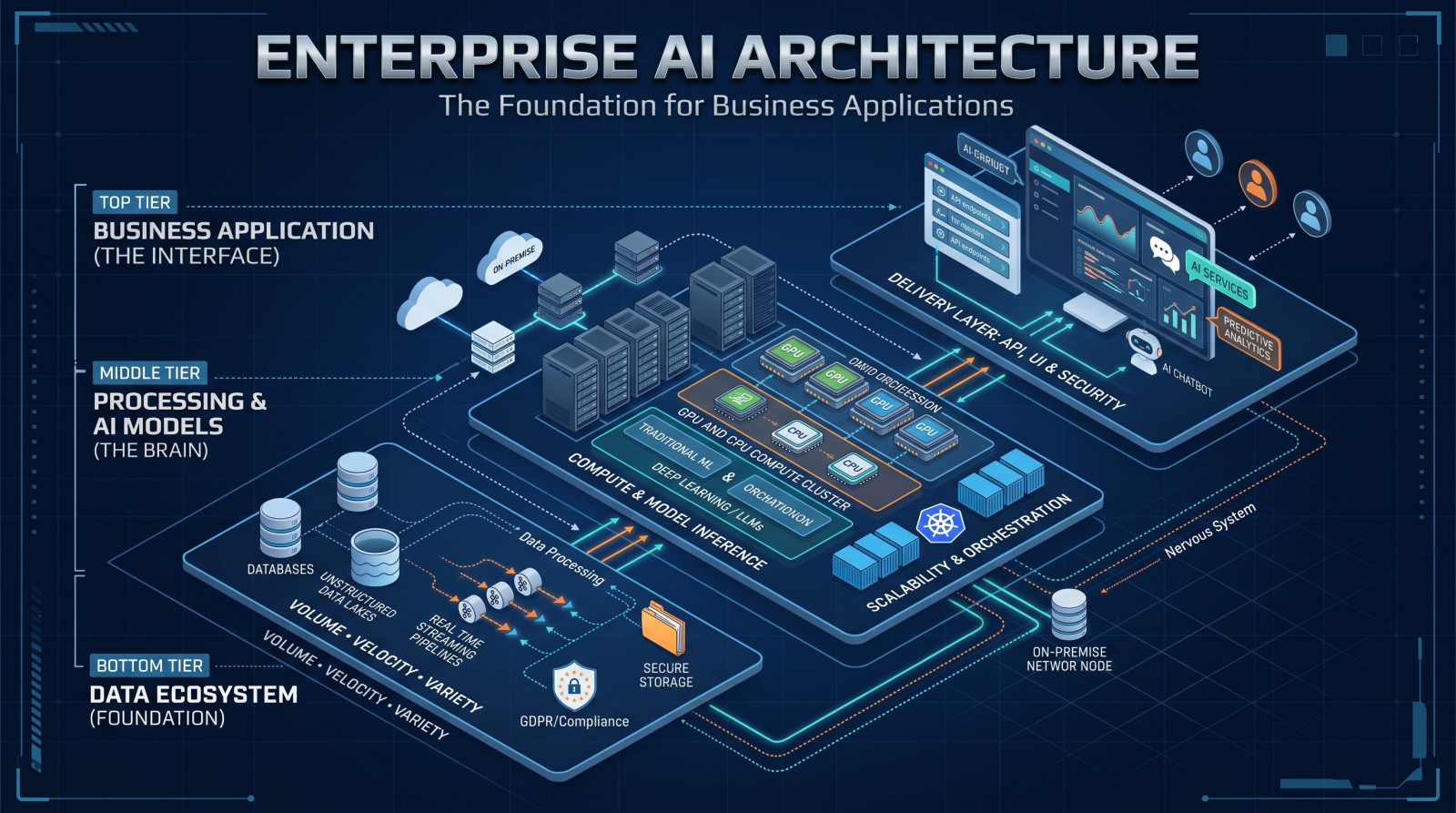
Challenge 4: Moving from Prototype to Production
The "Works on My Machine" Dilemma
Every engineer dreads the words: "Well, it works on my machine." But in AI, this problem is multiplied by ten. An AI model may perform exceptionally well within a pristine, clean, and static environment of a Jupyter notebook being executed on a powerful laptop of a data scientist.
Throwing the same model into a live environment is one of the trickiest problems in AI development. There are lots of chaotic factors involved in deploying AI in a live environment.
Now you have to think about how to scale up in order to deal with thousands of requests at once, minimize the latency, so people don't have to wait for a few seconds to get an answer, and how this newly created AI is going to communicate with your legacy systems. Without a proper deployment process, your amazing prototype is doomed to fail.
How Engineering Teams Solve It
-
Getting from prototype to production means removing the manual elements and considering the AI model just another scalable piece of enterprise software.
-
Adoption of Strict Containerization: For reducing any form of environmental inconsistencies, containerization becomes a major technology choice.
Docker containers help package the AI model with all its dependencies, libraries, and configuration files into one unit. The beauty of this container is that whether it runs on the developer's laptop or on some large-scale production system using Kubernetes, it performs the same way.
-
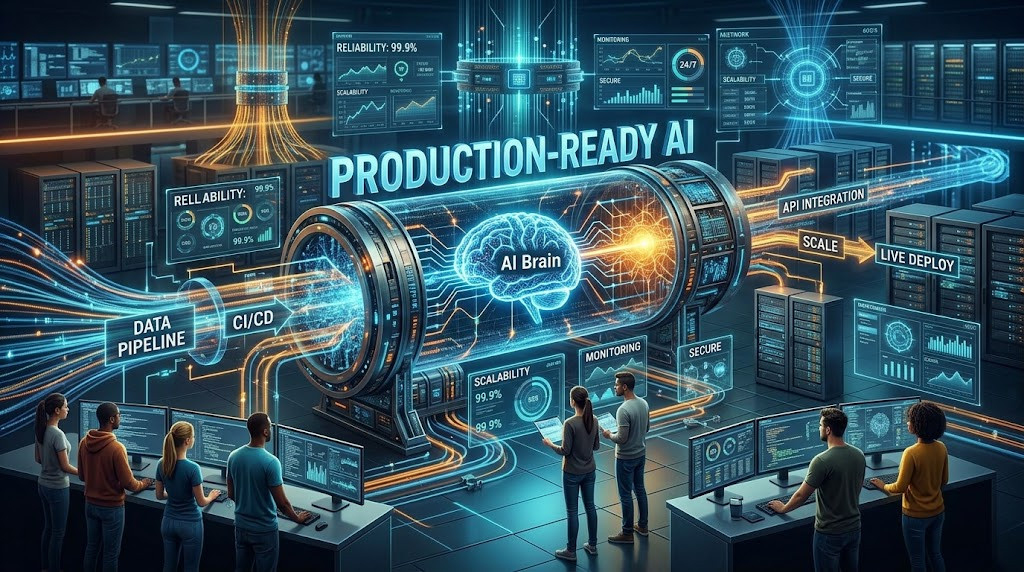
Building Custom CI/CD Pipelines: Machine Learning models cannot be deployed by using regular software pipelines. Specialized CI/CD pipelines for MLOps are built by teams.
The custom CI/CD pipeline does everything automatically; from fetching the latest codebase, training a model based on the latest dataset, running rigorous automation tests (both software testing and accuracy of the model) to deployment of the model in production.
-
Taking API-First Approach for Deployment: Trying to integrate the complicated machine learning code in an old legacy system is not an easy task. The API-first approach allows developers to build the model using lightweight web frameworks (such as FastAPI, Flask, etc.) and exposing the trained model in the form of API or gRPC service.
The main idea here is that AI is completely separated from the application’s architecture. The legacy application sends the payload to the API and gets the result (prediction).
Challenge 5: Dealing with Concept Drift and Model Decay
When Real-World Data Changes
For traditional software, once you have coded everything and have fixed all the bugs, then your software is set to run forever and ever. You do not get this luxury with AI. AI models are living systems; they are highly vulnerable to a condition referred to as concept drift and model decay.
This is arguably one of the most covert problems associated with AI development because it happens without any fanfare. Concept drift refers to a condition where the underlying statistics of the target variable become irrelevant over time.
The reality becomes different than how it was when the model was built. For instance, if you had built a fraud detection model based on 2019 consumer behavior, then it will utterly fail today because the dynamics of the online buying process have changed completely.
How Engineering Teams Solve It
-
You cannot stop the real world from evolving; you can design your systems such that they dynamically evolve along with the changing world.
-
Real-Time Decay Alerts: You have to be as vigilant about AI models as you are about keeping an eye on the server up time. Engineering teams deploy a real-time monitoring dashboard for tracking input data distribution and prediction confidence of the model. In case the incoming data starts showing a deviation from the training data distribution and/or prediction confidence falls below a certain threshold, alerts are automatically triggered.
-
Deployment of Shadows: To see whether your improved model is any better than the current one without risking the user experience, you perform shadow deployment. Engineers deploy their newly trained model next to the old decaying production model. They duplicate the traffic that comes from users and send it to both models; only the output of the older model goes to the user. Then, engineers compare how the shadow model works in comparison to the live one. If the shadow model turns out to be better, engineers route the traffic to it.
-
Automating the Retraining Loop: The way to prevent model decay is automation. Engineers set up continuous retraining loops that are triggered as soon as the monitoring system alerts them about the decline in the model's performance. The pipeline takes care of everything else—it gathers the newest data from the real world, retrains the model, tests it using the automatic testing framework, and deploys the retrained model.
Challenge 6: Bridging the Gap Between Data Science and Engineering
The Silo Effect in AI Projects
One of the most overlooked AI development problems is a non-technical one - communication between people.
Data scientists and software engineers work in separate silos and do not understand each other’s language. Data scientists mostly care about math, experiments, and maximum theoretical accuracy of their models.
Software engineers care about architecture, maintainability, uptime, and latency. Such diverging interests result in a deployment problem - while a data scientist may provide an enormous and highly inefficient model coded in messy Python scripts, the engineer is confused trying to find a way to scale that code to thousands of users at once.
How Engineering Teams Solve It
-
Breaking down these silos requires cultural change and organizational restructuring, as well as tooling standardization.
-
Building a Robust MLOps Culture: What needs to be done first is the implementation of a real MLOps culture that combines both disciplines. The message from the management should be clear and strong – the model is not considered "finished" simply because it is trained and gives good results in the notebook. Instead, the new definition of "finished" needs to become this: accurate, scalable, and deployed in production.
-
Forming Cross-Functional Pods: Instead of creating a "Data Science Department," where a model goes over the imaginary wall to the "Engineering Department," progressive companies form cross-functional pods. There is a single pod consisting of a data scientist, data engineer, backend engineer, and a product manager. Since they are in the same room and develop a single specific feature, they cooperate from the first day. The engineer gives advice regarding scalability during the process of designing the model, thus saving time in deployment.
-
Tooling Standardization: You need to make sure everyone speaks the same technical language. The teams do this through tooling standardization. They use version control (Git) not only for the code but also for the data (DVC). They require standardized coding styles, linters, and the same development environments so that the engineer could understand and debug the data scientist's code and vice versa.
Challenge 7: Ensuring Model Security and Privacy

Vulnerabilities in Machine Learning
With the incorporation of artificial intelligence into mission-critical business processes, it has been turned into a huge liability for cyber attackers.
The problem of addressing the security issues has now emerged as one of the most crucial AI development problems facing businesses in the current times. Machine learning models are vulnerable to new types of cyber-attacks.
"Data poisoning" is when the hackers change the training data in such a way that it negatively impacts the future functioning of the algorithm. "Adversarial attacks" occur when some altered inputs are fed into the live algorithm so as to make it give an absolute wrong answer in full confidence.
Apart from these problems, the major challenge in using machine learning models is that of using user data in training them in strict adherence to the laws such as GDPR and CCPA.
How Engineering Teams Solve It
-
Defending an AI model entails using advanced methods that extend well beyond classic network firewalls.
-
Adversarial Training: In order to protect an AI model from attacks from the outside world, teams implement adversarial training techniques during the training process. They artificially create thousands of "tricky" inputs for the model and include them along with usual inputs for the training purposes. By purposefully training an algorithm to distinguish and dismiss these malicious samples, they make the trained model incredibly resistant to any kind of manipulation in the wild.
-
Federated Learning: What can be done to train an AI using sensitive user data without collecting that data? Federated learning techniques allow teams to solve this problem. Rather than transferring all data to a server (which becomes an incredibly tempting target for hackers), the engineers push a model to each user device. The model learns from the user's data locally and transfers only weights (which are mathematical modifications made by the model in the process of training) back to the server.
-
Rigorous Role-Based Access Controls (RBAC) Implementation: Security begins from within. The engineering team employs extremely rigorous Role-Based Access Controls (RBAC) through their complete machine learning pipeline. It’s not necessary for all developers to have access to the raw production data. It is possible to protect data from any internal threats by providing access to specific data sets and model registries required by the team member.
Challenge 8: Finding and Retaining Specialized Talent
The AI Skill Gap
Even if you have the best information, the largest cloud budget, and the most brilliant business plan, without the proper individuals manning the keyboards, your endeavor will be doomed.
And the last one of our list of challenges when it comes to developing AI is probably the toughest – and certainly the most crippling – which is the massive worldwide shortage of talent.
This is due to the gaping hole in the market for individuals who possess an in-depth knowledge of traditional software architectures as well as modern machine learning mathematics. It is already hard enough to hire that niche Ph.D. level data scientist, much less an MLOps engineer who can deploy the models to the cloud.
How Engineering Teams Solve It
-
There is no time for waiting for several months to hire new employees. Companies need to proactively develop and hire talent by other means.
-
Focusing on Internal Upskilling Programs: Instead of competing for the scarce talent in the market, companies focus inwardly. They make massive investments in upskilling their internal senior backend and data engineers. This kind of employee already knows all the ins and outs of the corporate environment, including coding techniques and logic. With a little bit of training in ML frameworks (such as PyTorch or TensorFlow), companies can convert excellent software engineers into good AI engineers.
-
Making The Stack Simpler with Managed Services: You don't necessarily require a team of PhDs to create a good AI system. Engineering teams limit the number of highly specialized engineers they require by using managed AI solutions.
Cloud service providers have sophisticated, already trained models (OpenAI API, AWS SageMaker, or Google Vertex AI) which do all the hard work of providing infrastructure and algorithm tuning. Through the use of these platforms, any decent software engineering team can add advanced AI functionality without requiring to develop neural networks.
-
Collaborating With Advanced Talent Platforms: In instances where there is an absence of upskilling at the organization due to which managed services fail to deliver on customized needs, the advanced companies switch gears to hiring and instead collaborate with elite talent platforms like Gigmint.AI where they can connect with the best AI engineers.
Future-Proofing Your AI Strategy
But traversing the field of contemporary artificial intelligence requires nerves of steel. As we have discussed, challenges to develop AI are numerous and multifold.
From the difficulties of obtaining reliable data and handling bias in algorithms, to the technical obstacles of managing computational expenses, stopping model decay, and bringing complex machine learning workflows to production, the path is fraught with possible mistakes.
But all of these challenges are completely solvable. With the help of advanced software development practices and the stringent approach of MLOps, you can create AI solutions that are not just precise, but also robust, scalable, and safe.
Relying on engineering best practices is no longer just a nice-to-have option; it is absolutely necessary in order to make your project successful.
Are you prepared to bring your AI solutions out of the laboratory and deploy them into the real world? Don’t let deployment difficulties and talent deficits hamper your progress. Instantly boost your engineering capacity and solve your next AI challenge by reaching out to the carefully selected professionals from Gigmint.AI.