Scaling AI Solutions: 7 Proven Strategies to Hire the Right Freelance Team for Enterprise Projects

Scaling AI Solutions: 7 Proven Strategies to Hire the Right Freelance Team for Enterprise Projects
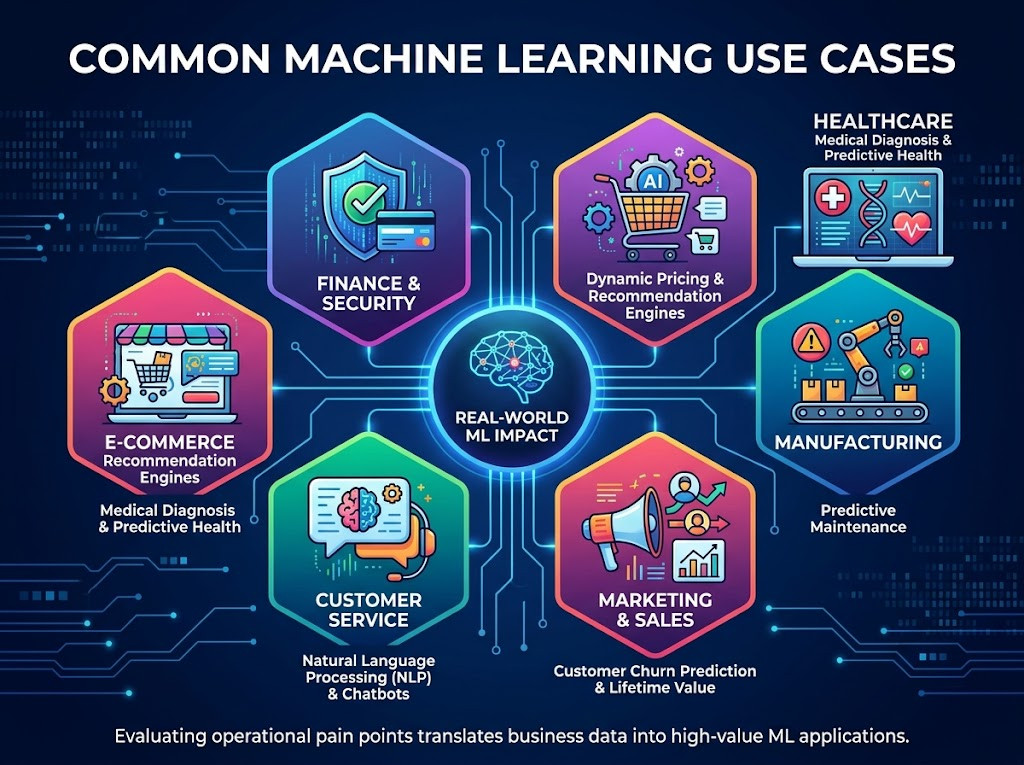
As businesses rush to integrate artificial intelligence into their organizations to achieve unprecedented levels of efficiency and innovation, they are hitting a speed bump — a massive, global shortage of AI talent. Filling positions for in-house Machine Learning engineers, Data Scientists and AI developers is a slow, difficult and very expensive process as companies seek to build out an in-house talent pool to support their emerging AI strategies.
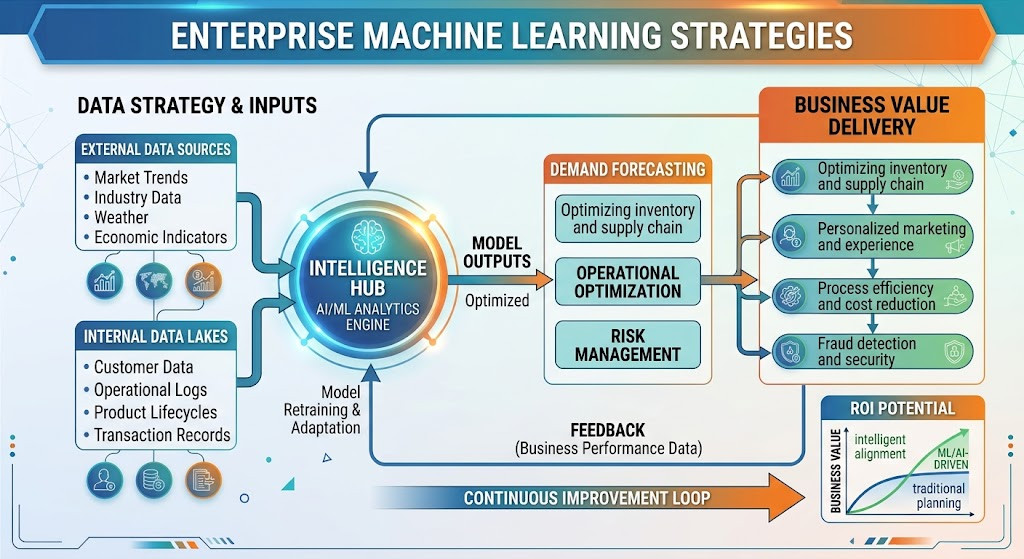
 Most companies struggling to Scale AI solutions face the following challenges: In order to scale up their AI related processes quickly and effectively, companies need to use various solutions such as predictive analytics and Large Language Models. They are not able to do so, since their normal hiring processes are way too slow to support the necessary AI related changes in their workforce.
There is, however, a significant alternative that corporations are increasingly employing to jump-start their projects: hire a freelance team of AI specialists, be they on a project-by-project basis or for an extended period of time.
Such freelance teams go by the moniker of “freelance AI teams” or “freelance AI specialists,” and are used by forward-thinking enterprises for a number of strategic reasons: to reach their projects on an accelerated basis and to do so in a cost-effective and efficient manner, by greatly reducing the time typically spent searching to hire the ideal candidate, and the many costs typically incurred by the enterprise in the time that candidate was being hired, such as the cost of the candidate’s time before they were hired, the costs incurred by HR to search for said candidate, the costs of interviewing and of flying in said candidate for interviews, and the many other costs typically incurred by the enterprise until that ideal candidate was found and hired.
In this article we will go through 7 strategies for finding, selecting and managing top freelance AI teams to help leaders of large enterprises to Scaling AI Solutions in their AI projects and bring their vision to life.
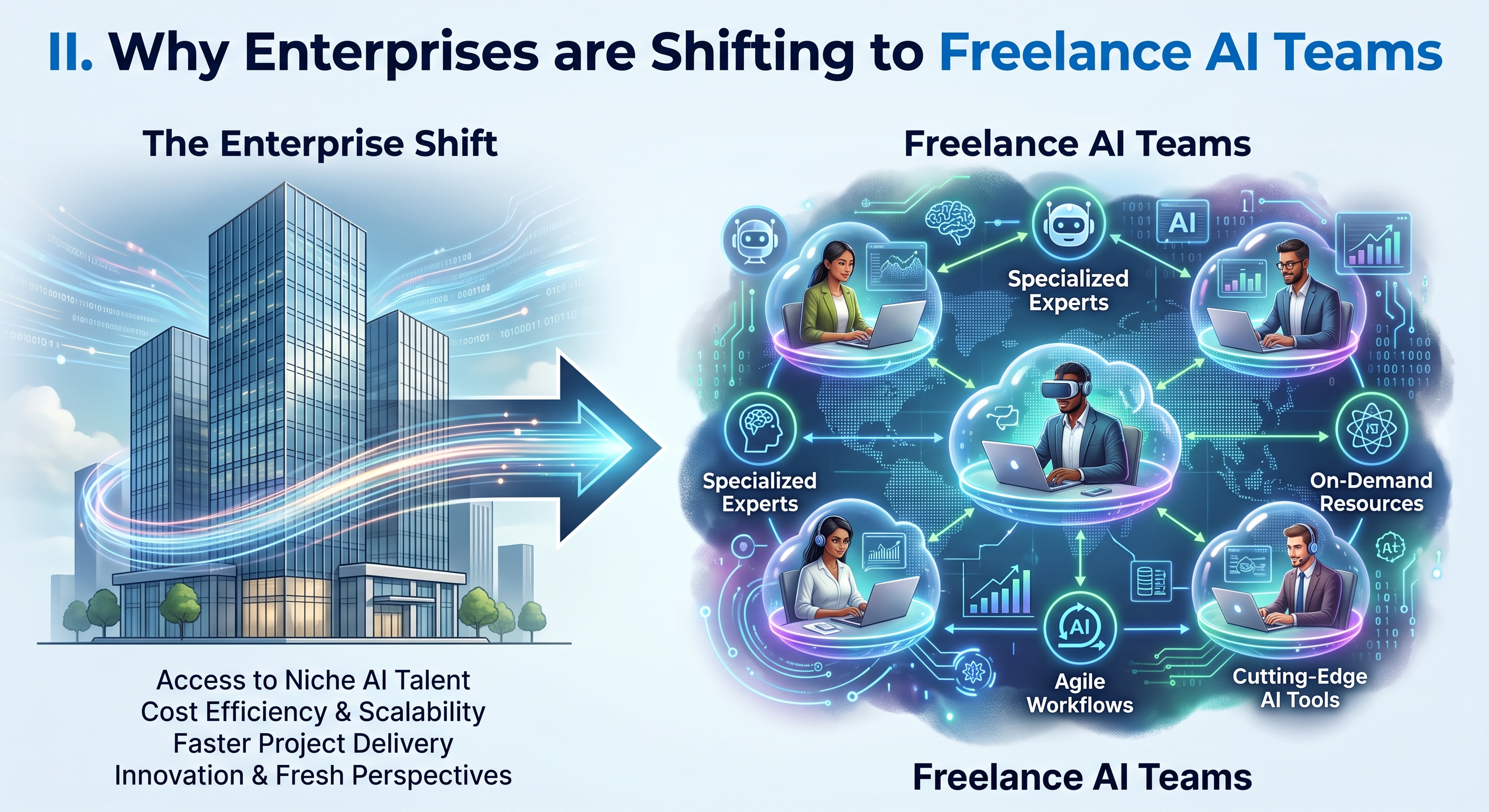
II. Why Enterprises are Shifting to Freelance AI Teams
Legacy practices for hiring in large corporations are failing in the race to Scaling AI Solutions. Because the corporate hiring process is so slow, and so costly to implement once the person is hired, the better approach for an enterprise is to bring in freelance AI people on a task by task basis. They can be hired, vetted, and brought up to speed in a matter of days, not months or years. To compete in the AI arms race, enterprises have to implement their projects much more quickly than that.
Speed to Market: Agile Freelance Teams. With the current AI Arms Race in full swing, it is imperative to complete a Proof of Concept (PoC) to Production within the shortest possible timeframe to gain competitive advantage. Elite freelance teams can be hired, vetted, and onboarded in a matter of days to complete a project, whereas traditional hiring processes can take anywhere from three to six months. The enterprise can complete a PoC and progress to Production within weeks, ahead of their competitors who are still completing their internal job descriptions.
Immediate Access to Highly Niche Expertise AI is a broad field. Typically, a single project within an enterprise requires more than just general data science capabilities. Most projects require hyper-specialized expertise in very specific areas. Building out a full team of highly specialized AI talent is a difficult and time-consuming process. However, by leveraging a global "Within such a network of freelancers, businesses will be able to instantly access a group of highly skilled and specialized AI professionals who are most likely to have resolved the exact problems the business is facing in its own efforts to scaling AI solutions.".
A strategic Cost-Efficiency and Scalability. Freelance AI professionals can be engaged on a project basis with costs paid for specific outcomes whereas full-time Machine Learning engineers typically command high base salaries and equity together with heavy overheads to be funded by an HR department. Additionally, Freelance AI professionals can be scaled up quickly to handle the intensive work of large model training and then scaled down for maintenance.
Risk Mitigation through Pilot Projects Launching a large-scale. An AI project to support an existing infrastructure of this scale is a massive risk. Engaging a freelance team of AI specialists to test the waters on a pilot project (be it the creation of an internal copilot or predictive model) enables an organization to test the waters before taking the massive plunge to full-scale, permanent, enterprise-wide AI adoption. This will allow leadership to not only assess the potential return on investment of an AI-based project but also assess the technical merit of any such undertaking.
III. 7 Proven Strategies to Hire the Right Freelance Team
Transitioning to a freelance-driven AI development model requires a strategic approach. Freelance hiring as you would traditional procurement will lead to failed projects as there are too many differences between hiring employees and freelancers to develop AI. To build a high-performing freelance AI team that works well for your company, here are 7 strategies to implement.
Strategy 1: Define Clear AI Objectives and Team Needs (The Blueprint)
Before you start your search for Freelancers for your projects, you have to do a check up to determine your needs for your AI-Projects. The biggest mistake when hiring Freelancers for IT Companies is searching for AI Experts in general. AI is a very broad field of work. Just as Computer Vision is very different from NLP, building a Chatbot is very different from building an Enterprise AI System.
Determine the necessary skill for development. Determine the current IT situation (e.g. how “complete” are the IT’s “Data Lakes”). If necessary engage a Data Engineer to build required data-pipelines and then use those data sources to do the AI development. There are many different AI techniques used for different purposes, determining which objectives will need to be satisfied and how best to use specific categories of AI to reach each defined objectives (in sum: define the BluePrint for AI development within your Enterprise). Create a set of specified role-definitions (e.g. AI-Prompt-Engineer required, ML Ops Engineer, or perhaps Full-Stack-AI-Developer).
With the specific “narrow” skill-set for the resulting desired individual, you will have a much better chance finding that perfect “precision” hire instead of mere generalized skill-sets that every other firm is searching for in order to complete the same, neverending list of projects.
Strategy 2 - Choose the Right Platforms for Enterprise-Grade Talent.
Where you look for talent is as important as the quality of the talent you find. By engaging with generalist freelance marketplaces such as Upwork or Fiverr for mission critical enterprise AI work, you are taking an enormous risk. Enter into thousands of unverified freelance profiles to find elite and experienced ML engineers to develop your AI architecture. Instead, consider utilizing specialized platforms for finding top-level freelance talent.
By leveraging platforms that have already found top freelance talent for you to consider for your work, you can gain a strategic advantage in your company by building an AI development team of freelance top talent when scaling AI solutions. Specialized platforms to find high quality freelance technology talent – platforms which vet talent prior to listing their profiles – are ideal.
Gigmint Ai is one such example of platforms for top tech talent. We have pre-vetted freelance developers, freelance designers, and freelance engineers on GigMint who can complete a wide variety of technology tasks for enterprises around the globe. Because the freelance talent pool on GigMint Ai has been vetted, GigMint is able to ensure that all freelance development work for enterprises completed by freelance talent on the platform is completed to high technical quality and is completed on time.
Strategy 3 - Develop a Quality Job Description
On Freelance platforms, top-tier AI Experts in high demand can choose their projects and are not impressed by marketing buzzword-filled job descriptions from Enterprises seeking to implement AI within their organizations. A highly technical, project-focused description of the required work is key to finding the correct Expert.
When describing the project, instead of vague descriptions of required functionality, they should describe the results they can expect from the Expert engaged and the ways in which they can measure the success of the work completed. For example, instead of Looking for an AI rockstar to improve the chatbot, seek an Expert who can reduce the current average API Latency of 2 seconds by 20% while achieving an accuracy rate of 95% on the RAG queries currently being conducted within the domain of the work.
You want to detail your required tech stack. This means mentioning the programming languages such as PyTorch or TensorFlow as well as cloud platforms such as AWS SageMaker or Google Vertex AI, for instance for building custom LLMs. You might also require freelance expertise in regards to LangChain, LlamaIndex, or even for containerization using Kubernetes.
Also clearly outline the objectives for the upcoming freelance project as well as the resulting metrics for success. Instead of improving a chatbot in order to increase user interaction in an online-shop, for example, your main objective should be to decrease latency for your APIs by up to 20% while reaching an accuracy of 95% for so-called RAG-queries, which are related to your company’s specific domain.
Strategy 4: Implement a Rigorous, Multi-Stage Vetting Process
As the quality of freelance talent entering the marketplace has increased exponentially over the last several years, it has become critical to go beyond reviewing the resumes of interested candidates in the AI marketplace. No longer can enterprises hire a qualified freelance AI Expert based on their resume alone; instead, such a candidate must be able to produce and demonstrate the ability to produce work of high enough quality to add significant value to the projects on which they are engaged.
Implementing a multi-stage due diligence process to validate the claims of a wide variety of freelance candidates is thus key to the process of building a high performing freelance AI team that works seamlessly in support of an organization’s broader strategic objectives to scaling AI solutions.
Portfolio Review for Production Proof: Do not bother about papers written in college or even winning some competition on Kaggle (AI modeling contest website). As companies are interested in production ready solutions, their portfolio should present evidence that solutions deployed on production environments, hopefully on cloud such as AWS, Azure, Google Cloud or managed ML platforms such as SAP AI. Freelancer’s experience should also be able to manage large volumes of APIs calls simultaneously, as often required by modern applications that are built on top of Microservices Architecture.
The Technical Interview: Look for someone who has deep expertise in a specific field. This person should be able to explain the choices that he or she would make when developing an AI powered system. For example you could ask the person to describe when RAG would be better than fine-tuning a model. Additionally you could ask them to explain how they handle the edge cases in training data and how they would scale up an LLM API and then ask them to describe how they would go about to optimize the cost of that LLM API.
The Paid Trial: This is the ultimate test for a potential Freelancer’s skills and abilities. Run them to complete a small, paid trial for a micro-project i.e. a small RAG (Regression-Associations- Classification) prototype that uses a portion of your data, and audit an existing architecture that has been trained and fine-tuned on your data. Ideally, you would want to assess a candidate’s ability to solve problems that relate to your current challenges. This is also an excellent way to experience the Freelancer’s skills and code quality, and how they would interact with you on a continuous basis before you commit to a long-term contract.
Strategy 5: Assess Enterprise-Level Soft Skills and Security Awareness
Code is a liability. Particularly in an enterprise context, brilliant code from a brilliant developer is still a huge risk if the developer can’t communicate or if he/she compromises your data. So in an enterprise environment lots of developers lack critical soft skills and/or necessary security awareness just as much as they struggle with corresponding coding skills for the special demands AI poses. Communication is key, and not just communication of how to use a tool or service.
A freelance engineer needs to be able to translate very complex neural network architectures into value for non-technical stakeholders such as a CMO or CFO. Also, you must verify that they have a good understanding of your company’s security protocols and data privacy policies and procedures, as well as any relevant data privacy laws (e.g. GDPR, HIPAA). They will also need to explain how they handle PII (Personally Identifiable Information) and describe past experience with secure, containerized deployments. AI security is non-negotiable for top freelance engineers.
Strategy 6: Structure the Contract for Success
A well-structured contract protects both the enterprise and the freelancer, ensuring alignment on deliverables and timelines. Avoid ambiguous, open-ended arrangements.
The way you pay a freelancer for his or her work can be a critical component of your contract. Hourly rates for instance are normally the best payment method if you require someone to do lots of maintenance work, but a fixed price for completing specific parts of an AI build could be a lot safer (Data Prep, Model Building, API Integrations, Production Deployment etc).
Consider Service Level Agreements (SLAs) too (e.g. Response Time etc) and define Intellectual Property (IP) within the contract too – as you’ll naturally want this to rest with the Enterprise for any custom models or code written by the freelance team. In addition to the above, stipulate the communication within the contract too (e.g. weekly updates and notify instantly of any ‘blockers’).
Strategy 7: Seamless Onboarding and Integration
The biggest challenge is integration of external experts with your internal team and making them an extension of it.
Give your freelance team members access to the relevant parts of your data lake, cloud environment and source code repository using strict Role-Based Access Control (RBAC) to a set of partitioned resources. It is also very important that they are assigned an internal champion (such as a domain expert or internal IT lead) who can 1) explain the culture of the company and 2) assist them in getting access to the right data to solve the problem at hand, as well as 3) check for any internal compliance hurdles that need to be jumped through. Once you have integrated your external AI experts with your internal teams and culture, they become a powerful part of your overall innovation strategy and are working as one team using all of the same tools (e.g. Slack, Jira) that your other teams are using.
IV. Overcoming Common Challenges When Managing Freelance AI Teams To Scaling Ai Solutions
While bringing in elite freelance AI talent can help offset the effects of the acquisition bottleneck, bringing in external experts to work within your company’s workflows creates new challenges that must be anticipated and managed by leaders to keep projects moving at the required velocity when scaling AI solutions. Bridging Communication and Time Zone Gaps It is not uncommon that elite freelance AI talent is distributed across the globe which results in significant time zone differences.
Managing communication effectively is crucial for successful project execution and management. Thus, elite freelance AI talent has to work in fully asynchronous mode while being available for a daily golden hour of overlapping time for live meetings to discuss and to resolve any blockers quickly. As mentioned before, effective project execution and management can be supported by a project management board where all team members and stakeholders can follow the status of a project in detail.
Also, recorded video walk-throughs will be a good help for a successful execution and management of a project. Freelance AI engineers working on a large AI project for an enterprise can easily get stuck in a siloed world. External contractors such as freelance AI engineers can’t develop accurate models for a project unless they have the business context to inform their work. Bringing an internal domain expert into the mix can prevent this from happening. The domain expert acts as a liaison for the external engineers.
He or she can provide the freelance AI engineers with all the appropriate documentation. Also, the domain expert can set up the external engineers to have secure but direct access to all the various data lakes that will be used to inform their model development. This will establish the needed foundation to successfully scaling AI solutions. Prevent Scope Creep from Your AI Projects Freelance engineers working on AI projects can suddenly discover new ways to complete the work.
While that is good for the engineer, it can be problematic for the enterprise. Preventing scope creep from AI projects requires more than just having the engineer work under a vague, open-ended retainer. In addition to providing a clear scope of work for the hired engineer, it is also necessary to work under a set of milestone-based goals. Utilize an enterprise-wide agile methodology, such as sprints, and iterate off of the results of the completed work to reach your desired AI-powered destination.
V. Conclusion
Scaling AI solutions for an enterprise is difficult to achieve. High performing AI solutions require specialized talent working quickly to define precise technical requirements, to recommend and implement suitable platforms, to build production quality work and to integrate into existing technology stacks. By taking a freelance model, such as that provided by GigMint, to scaling AI solutions, Enterprise Leaders can shift from slow and ineffective traditional hiring processes to implement their technical strategies quickly to achieve their vision for their enterprise.
The traditional process of hiring talent today takes too long. The speed of change in AI and how it’s becoming more mainstream and a core part of everyday business requires enterprises to scale AI-focused teams quickly to remain competitive. A freelance approach enables businesses to workaround typical talent shortages quickly, bringing their technical vision to life before their competition can.
Stalled by a lack of talent? Don’t let your most critical technological initiatives come to a standstill. Scaling AI solutions with confidence with the world’s best AI developers and machine learning engineers — all ready to hire from GigMint today.
VI. FAQs
How much does it cost to hire a freelance AI engineer for an enterprise project? I'd say it depends on the particular freelance AI engineer and the complexity of your enterprise project. That being said, generally speaking top freelance AI engineers will cost between $80 and $250+ per hour for their services, and often will set up a fixed price for a certain milestone for a larger project.
What is the difference between an AI developer and a Machine Learning engineer? An AI developer is primarily concerned with integrating AI into applications for end users, typically by utilizing pre-trained models or leveraging AI-based APIs such as large language models (LLMs). A Machine Learning (ML) engineer creates the actual algorithms and data pipelines from scratch and then trains them to achieve specific goals, as part of the overall ML life cycle.
How do you protect your data working with freelance AI teams? Protect your data by (1) requiring your freelance team sign a comprehensive Non-Disclosure Agreement (NDA), (2) strictly controlling access to your data by enforcing a strict Role-Based Access Control (RBAC) policy, and (3) by requiring the freelance team to work in a secure, partitioned cloud environment. Never transfer raw PII (Personally Identifiable Information) to the AI freelancer – transfer it after it has been anonymized.